Are Ink Cartridges Better Than Refill Bottles?
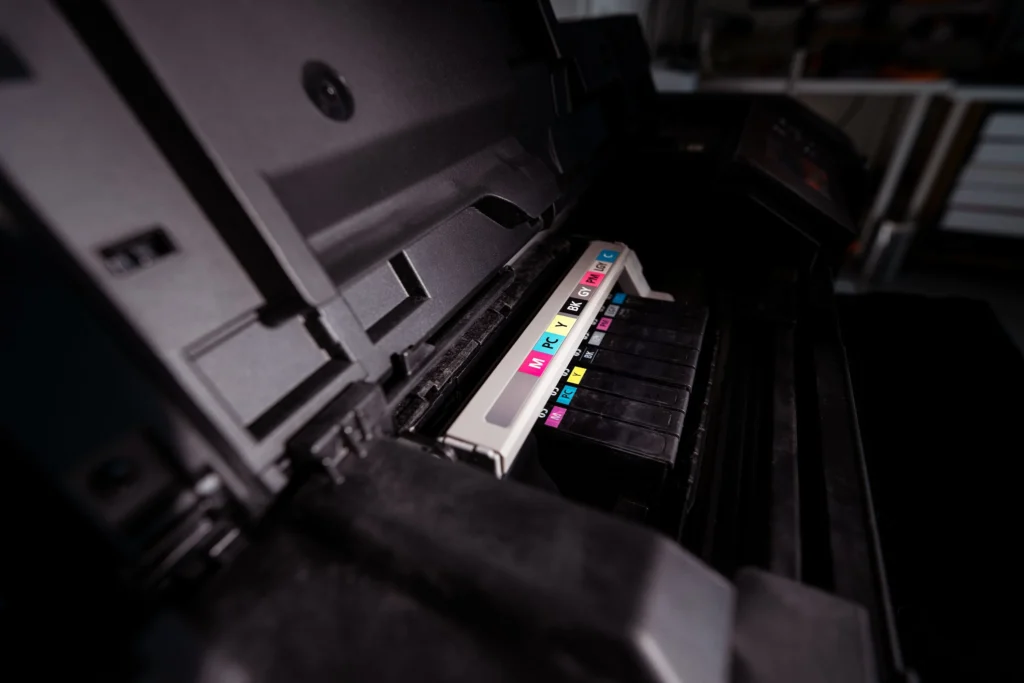
There are two ways to get ink for printers. For professionals that print frequently, such as daily or weekly, the cost of printer ink, the print quality, and the impact on the environment all can be greatly affected by the choice between ink cartridges and refill bottles for printers. There is no definitive answer here that is better for everyone and they both will have their uses. Typically, ink cartridges in printers are easier to use and more consistent in the printing quality than using refill bottles for printers, especially for those that are not used to maintaining their printer supplies. However, the biggest advantage to refill bottles for printers would be to save money on printer supplies, and to have a more environmentally friendly supply.
What Are the Main Differences Between Ink Cartridges and Refill Bottles?
The main point of contention when comparing printers that use ink cartridges with those that employ a Continuous Ink Supply System (CISS) or tank printers is how the printers dispense the ink. Refill bottles, which are used to fill the tanks on these printers, contain large quantities of liquid ink. And whereas the ink and the printhead or chip are a sealed unit in cartridges, bottles of ink are filled and then poured into the tanks on these printers.
Design and Functionality
Ink cartridges are designed for quick replacement. Each cartridge typically holds a limited amount of ink, often between 8–15 ml for color models. Their design ensures consistent print quality because the printhead is replaced regularly or maintained by the cartridge’s integrated system. Refill bottles, on the other hand, feed ink into reservoirs that can hold hundreds of milliliters at once, reducing replacement frequency but requiring careful handling to avoid spills or contamination.
Cost Structure
Cartridge-based printers usually have a lower upfront cost but higher long-term expenses due to frequent replacements. A single set of OEM cartridges can cost nearly as much as a new printer. Bottle-based systems reverse this model: higher initial investment but significantly lower running costs per page. For instance, Epson’s EcoTank series claims up to 90% lower printing costs compared with traditional cartridge printers.
Environmental Impact
Cartridges also generate more waste in the form of plastic as they contain a plastic outer casing and chip, and often are sent to waste upon replacement of the cartridge. Many manufacturers do offer cartridges for recycling; however due to low participation rates globally, they currently end up in landfill. Refill bottles on the other hand use less packaging per milliliter of ink than cartridges and re-fill tanks already in use, minimizing waste in the process.
How Does Print Quality Compare Between the Two Systems?
The quality of printed images depends on several parameters, such as the formula of ink, the pre-setting of the printer, and the frequency of maintenance. Graphic designers and photographers working professionally will mostly rely on cartridge-based printing systems, because of the more predictable result as compared to other alternatives.
Color Accuracy and Sharpness
Cartridge inks are specifically designed to work with particular printer models to achieve the best possible droplet control and color mixing. As a result, text is printed in sharp detail and colors are more accurately reproduced. In professions where it is crucial to reproduce brand colors accurately, cartridge inks are the best choice.
Longevity of Prints
OEM cartridges typically use pigment-based black inks for documents and dye-based colors for images. These combinations resist fading better than some third-party refill inks. Bottle systems may use similar formulations but can vary across brands; improper storage or exposure to air may alter viscosity over time.
Maintenance Requirements
Refillable systems are typically cleaned on a regular basis to prevent blockages to the print-head which is fixed in place within the printer body. The cartridges for these refillable systems are designed such that they can be replaced in order to refresh the delivery component.
Which Option Offers Better Cost Efficiency Over Time?
The measure of cost efficiency of a given service is based upon the volume and/or frequency of use rather than an comparison of prices on an individual basis.
High-Volume Printing Scenarios
For offices printing thousands of pages monthly, refill bottle systems drastically reduce cost per page—sometimes below one cent per monochrome sheet. Cartridges cannot compete at that scale due to their limited capacity.
Low-Volume Home Use
Occasional home printing may end up costing more in the long run with bottled ink as bottled ink dries in unused bottles and clogs fine lines and causes printer to perform unnecessary cleaning which also uses up all the ink in that line. Cartridges may cost more per print but have much better shelf life and are generally easier to use.
Subscription and Third-Party Options
Some brands have even implemented a subscription-based service, like HP Instant Ink, which constantly supplies the customer with new cartridges before they even run out. On the other hand, there are people who manually refill their cartridges with bottled-ink from third-party suppliers in order to save money. In some cases, this can invalidate the printer’s warranty and even cause problems with the color quality if not matched correctly.
Are There Environmental Advantages to Using Refill Bottles?
Sustainability is playing an increasingly significant role in the office technology procurement policies of countries worldwide.
Reduced Plastic Waste
Each cartridge contains multiple non-biodegradable components such as microchips and foam pads. Refill bottles minimize these materials by reusing tanks repeatedly over years of operation.
Lower Carbon Footprint from Shipping
Bulk packaging of inks in bottles as opposed to smaller amounts in cartridge packs results in fewer deliveries per liter of actual product use. This means less emissions from transportation for the replacement products.
Recycling Challenges
Major brands such as Canon and HP have introduced recycling programs but these are mainly available in developed countries and suffer from various logistical constraints that prevent their expansion to other markets. In contrast, bottle-based recycling systems have the advantage of keeping the number of disposable parts used as much as possible to a minimum.
How Do Reliability and Convenience Compare?
The reliability of the function is influenced by the maintenance of both systems rather than by defects of either system.
Ease of Replacement
Cartridges have a huge advantage for on-the-fly refilling. Swapping one out for another takes mere seconds and does not run any risk of spilling or incorrect filling. In contrast, bottled refills are typically used for refilling Inkjet printers and are notoriously slow. The biggest disadvantage is that of overfilling the bottle and causing a leak. Should such an event occur, the leak can rapidly cause damage to nearby components should it not be addressed immediately.
Printer Compatibility Issues
Cartridges rely on proprietary chips that sometimes reject third-party replacements after firmware updates—a common frustration among users seeking cheaper alternatives. Tank printers using refill bottles rarely face such digital restrictions once filled correctly.
Downtime Considerations
When uptime is valued by a business then a cartridge is usually the preferred choice as a replacement can be done very quickly and on a very predictable basis under warranty. Refillable systems can experience periodic down time due to the manual refilling and cleaning of the filling system.
What Should Professionals Consider Before Choosing Between Them?
When choosing between a centralised and decentralised heating system, several criteria must be taken into account by professionals, including the scale of the operation, the flexibility of the budget, environmental objectives and the willingness to carry out maintenance.
Total Cost of Ownership Analysis
Costs, including the costs of consumables, the risk of down time, maintenance supplies, and warranty costs must be thoroughly detailed to go beyond the cost of the product itself.
Workflow Integration Factors
In environments where color fidelity is crucial—such as marketing agencies or photo labs—cartridge printers maintain tighter calibration control across batches compared with bottle-fed systems prone to minor viscosity shifts over time.
Sustainability Policies Alignment
ISO 14001 or corporate ESG objectives might influence organizations to opt for refillable disposers as this enables to specify determined decrease of material waste per printed sheet – a criterion of ever increasing importance for procurement worldwide.
FAQ
Q1: Will using refill bottles void my printer’s warranty? A: It’s common practice for many manufacturers to state that using non-OEM inks will void your warranty if such supplies cause damage and this is then fixed under warranty. Check the specific warranty terms and conditions of the manufacturer for the printer you are planning to use with non-OEM inks.
Q2: How long will cartridge prints last as opposed to Bottle prints? A: Generally cartridge prints will last longer as the OEM have formulated the print using pigments that have been optimized for resistance to fade when exposed to UV light. This is opposed to some lower cost third-party bottled dyes.
Q3: Can refill bottles print photo-quality prints? A: Yes. As long as high-grade pigment inks are filled into the refill bottles, print output with consistent tone values can be produced. To reach the best results, however, calibration is needed since tank printers are prone to the tiniest of density differences over time.
Q4: Is it harder to maintain a refillable printer? A: Yes. Refillable printers require more service on a regular basis, such as nozzle checks and tank cleaning. Since the printheads are affixed to the printer, neglecting to service the printer as required will increase the likelihood of clogs compared to changing cartridges.
Q5: Is switching from cartridges to bottles worth it financially? A: For users printing large volumes monthly—such as schools or small businesses—the savings from bottle refills quickly outweigh initial setup costs within months of regular operation.