Which Inks Are Best for Writing, Art, and Office Use?

Inks look simple until you have to buy the right one for a classroom, office, shop shelf, art set, or signing desk. A blue refill that feels fine for quick notes may smear on glossy labels. A bright marker may look great on a color chart but bleed through thin paper. For buyers comparing Inks, the best choice comes down to use, paper, drying time, color strength, safety labels, and how long the writing needs to last.
This guide explains common ink types in plain English, then shows how to choose them for daily writing, art, office records, and bulk orders. It also uses public information from recognized bodies such as the Library of Congress, the U.S. Consumer Product Safety Commission, the U.S. Environmental Protection Agency, the National Archives, and ISO standards, so the advice is tied to real product concerns rather than loose sales talk.
What Makes Good Inks Worth Buying?
Good ink is not just dark color in a pen or bottle. It has to move well, dry at the right speed, stay readable, and fit the tool. A buyer also needs steady quality from batch to batch. That is boring, maybe, but boring is good when an office manager orders hundreds of refills and expects every pen to write on Monday morning.
Smooth Flow and Clean Lines
Flow is the first thing you notice. Ballpoint ink is usually thicker and oil-based, so it writes with less mess and lasts well in storage. Rollerball and fountain pen inks are usually more fluid, so the line feels softer and darker. Gel ink sits in the middle, giving strong color with a smoother feel than many ballpoints.
For daily writing, clean starts matter more than fancy color names. If a pen skips after sitting uncapped for a short time, users will complain. In schools and offices, black and blue inks with reliable flow often sell better than unusual shades because they match forms, notes, and signatures.
Color Strength and Drying Time
Dark ink helps readers scan notes fast. This matters in offices, warehouses, clinics, and classrooms where handwriting is not art, it is information. Gel inks often win on color strength, but they may dry slower on coated paper. Ballpoint inks tend to dry faster on many everyday papers, though some feel lighter.
Drying time also depends on paper. A smooth planner page may keep ink wet longer than a rough notebook sheet. Left-handed writers often prefer quick-dry gel or ballpoint inks because their hand crosses the fresh line. One small smear on a shipping form is enough to make people switch brands.
Bottle, Cartridge, or Refill Fit
Packaging changes the buying decision. Bottled fountain pen ink suits hobby users, artists, and calligraphy. Cartridges are cleaner for students and gift sets. Refills are better for offices because you can keep the pen body and replace the writing unit.
For wholesale or export orders, refill fit should be checked early. Similar-looking refills may differ by length, tip size, shoulder shape, and ink type. A 0.5 mm gel refill and a 1.0 mm ballpoint refill are not substitutes just because both are blue.
Which Inks Work Best for Daily Writing?
Daily writing rewards comfort and low trouble. You want ink that starts quickly, does not blob, and stays readable after the page gets handled. The right choice depends on whether the user values neatness, bold lines, or a more personal writing feel.
Ballpoint Ink for Low-Mess Notes
Ballpoint inks are popular because they behave well in normal office life. The ink is more viscous than rollerball ink, so it usually dries quickly and leaks less. It works for receipts, notebooks, attendance sheets, and general desk pens.
If you buy for hotels, banks, service counters, or trade shows, ballpoint pens are often the safe pick. They can sit in a cup for weeks and still write. The line may be less bold than gel, but the low-mess performance is a fair trade.
Gel Ink for Dark Lines and Fast Reading
Gel ink gives a rich line with less writing pressure. It is popular for study notes, planners, journaling, and signatures where color strength matters. Black gel ink can make handwriting look clearer even when the writer is moving fast.
The catch is paper match. On absorbent paper, gel ink can look sharp and dry fast. On coated labels or glossy cards, it may smear. For bulk buyers, a simple test on the actual paper used by customers is more useful than a beautiful catalog sample.
Fountain Pen Ink for Personal Feel
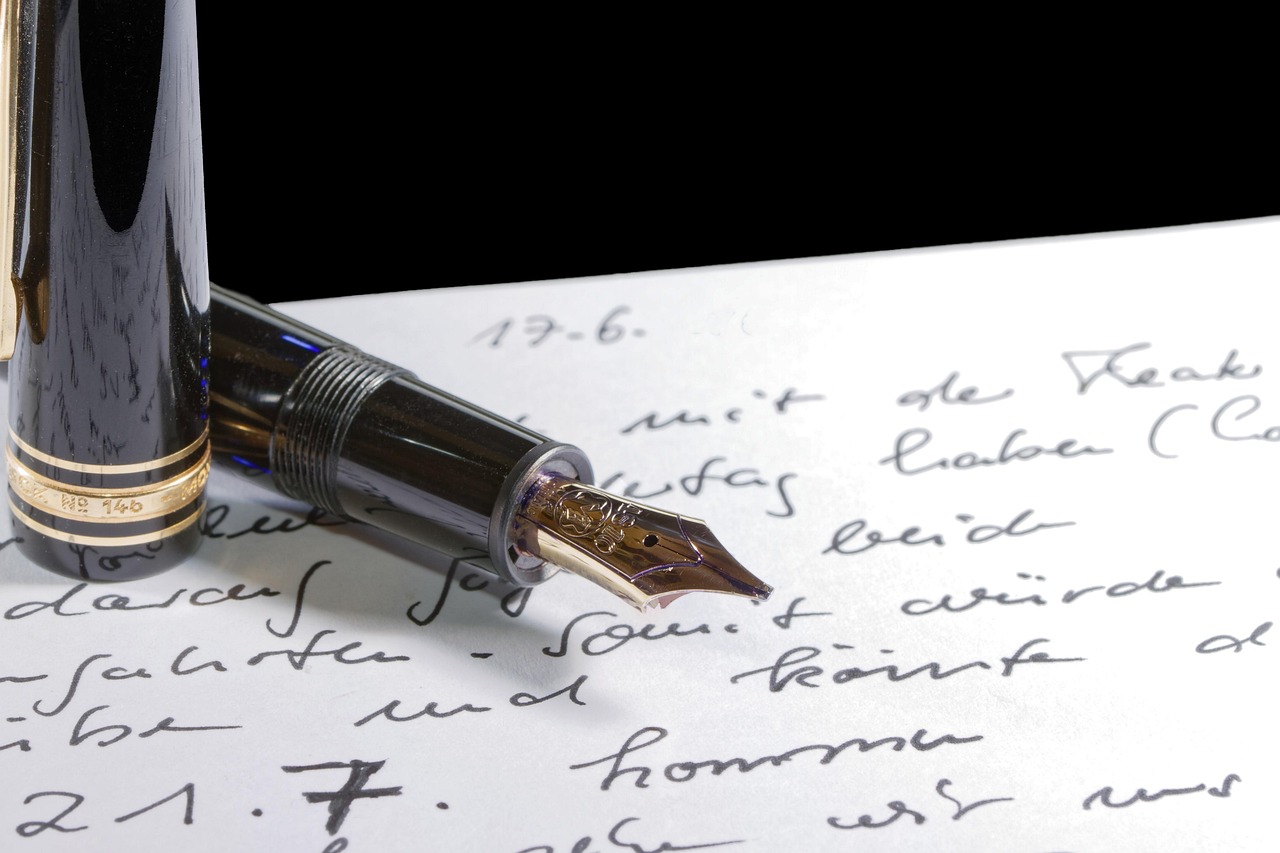
Fountain pen ink is chosen for feel, line variation, color choice, and refillable use. It suits gift sets, calligraphy practice, premium stationery, and users who enjoy writing as a habit. It is less ideal for rough warehouse paper or forms handled in a hurry.
Most fountain pen inks are dye-based and water-soluble unless sold as waterproof, pigment, iron gall, or document ink. If permanence matters, the bottle label should say so clearly. A pretty bottle is nice on a desk, but it does not prove archival quality.
How Do Art Inks Differ from Office Inks?
Art inks carry a different job. They may need to blend, layer, resist water, sit on top of paper, or work with brushes, dip pens, markers, and technical pens. Office ink is judged by neat writing. Art ink is judged by color behavior, surface control, and safety information.
Pigment Ink for Stronger Surface Coverage
Pigment inks use tiny color particles rather than fully dissolved dyes. They often give stronger light resistance and surface coverage, especially when matched with the right paper. The Library of Congress notes that pigment-based inkjet inks, used with suitable matching paper, can provide more stable and permanent images when stored in dark, room-temperature conditions with relative humidity around 30% to 50%. (loc.gov)
That does not mean every pigment ink is perfect. Pigment can clog fine pens if the formula is not made for that tool. Use pigment fountain pen ink only when the maker says it is safe for fountain pens.
Dye Ink for Bright Color Blending
Dye inks usually give bright color and easy blending. They are common in fountain pen inks, brush pens, and many marker lines. Artists like them because they move nicely with water and create soft gradients.
The weakness is durability. Many dye inks can fade faster in sunlight or move again when wet. For sketchbooks, cards, and classroom art, that may be fine. For certificates, signed documents, or display work near a window, buyers should look for lightfast or document-grade claims backed by testing.
India and Acrylic Ink for Studio Work
India ink and acrylic ink are common for drawing, illustration, comics, and mixed media. India ink often gives dense black lines. Acrylic ink can dry water-resistant and work on more surfaces than standard writing ink.
Tool choice matters here. Acrylic ink may work with brushes and dip pens but can ruin a fountain pen if it dries inside the feed. For retail listings, say clearly which tools the ink supports. That small note can prevent returns.
Which Inks Last Longer on Paper?
Longevity depends on ink chemistry, paper, light, moisture, and storage. A page kept in a closed folder can survive far better than the same page pinned beside a sunny window. If the writing has legal, archival, or business value, choose inks with tested resistance claims.
Documentary Ink Standards Matter
ISO has specific documentary-use standards for writing instruments. ISO 12757-2:1998 covers ballpoint pens and refills for documentary use, while ISO 14145-2:1998 covers roller ball pens and refills for documentary use. These standards are useful buying signals when forms, contracts, certificates, or official records need long-term readability. (iso.org)
For product pages, the wording should be exact. If a refill is not tested to a documentary standard, avoid calling it document-proof. Use softer terms such as “suitable for everyday notes” or “water-resistant after drying” only when the supplier data supports that claim.
Water and Light Resistance Need Testing
Water resistance is not all-or-nothing. Some inks leave a readable line after a spill but release colored dye around it. Some disappear almost completely. Light resistance also varies. The Library of Congress warns that once ink has faded from aging, light exposure, or other causes, the mark cannot be restored to its earlier intensity. (loc.gov)
A practical test is simple: write on the target paper, wait 24 hours, add a water drop, then rub lightly after drying. For light testing, place one sample in normal room light and one in a closed drawer for several weeks. It is not a laboratory test, but it shows differences customers can see.
Paper Choice Changes the Result
Paper can make good ink look bad. Thin paper may bleed. Coated paper may smear. Rough paper may feather. Fountain pen users often know this already, but office buyers forget it until a gel pen turns a form into a gray blur.
The National Archives gives a useful record-keeping rule: when ink is needed for permanent notations or archival markings, it recommends waterproof, fade-resistant, non-acidic ink that meets ACMI non-toxicity standards with the AP Seal. That advice is aimed at records, but it also helps buyers think about serious writing tasks. (archives.gov)
What Safety and Environmental Details Should You Check?
Ink is a chemical product, even when it looks harmless in a small pen. For art kits, school supplies, and office packs, safety labels and environmental claims should be read carefully. Good suppliers make this easy. Weak suppliers hide behind vague phrases.
ASTM D-4236 Labels for Art Materials
For art materials sold in the United States, ASTM D-4236 is a key label reference. U.S. Consumer Product Safety Commission business guidance says a conformance statement such as “Conforms to ASTM D-4236” should be placed on the product or packaging when practicable. The standard deals with chronic health hazard labeling for art materials. (cpsc.gov)
This label does not mean a product is edible or safe for careless use. It means the product has gone through the required hazard review and labeling path. For children’s markers, paints, and drawing inks, buyers should also check age grading, small parts, cap safety, and local market rules.
Low-VOC Claims Need Proof
VOC claims need care. The U.S. Environmental Protection Agency describes compliant low or no VOC and HAP inks and coatings as a pollution-prevention approach used in surface coating and printing operations. The EPA also notes that VOC content can be determined from product formulation data or by EPA Method 24. (epa.gov)
For retail stationery, the best wording is specific. “Low odor” is not the same as “low VOC.” “Water-based” is not the same as “non-toxic.” Ask for test reports or supplier declarations when environmental claims appear on packaging.
Storage Habits Reduce Waste
Good storage saves money. Keep ink away from heat, direct sun, and loose caps. Store markers horizontally if the maker recommends it. Keep bottled ink closed to slow evaporation and dust contamination.
For bulk orders, rotate stock by date. A small label on each carton can prevent old inventory from sitting behind fresh shipments. Nobody enjoys a drawer full of dried-out markers, and no buyer wants returns because caps were loose during storage.
How Should You Choose Inks for Bulk Orders?
Bulk buying is less about the “best ink” and more about the best match. A school, office, art shop, warehouse, and gift supplier may all need different inks. Start with the user, then check tool fit, paper match, labels, shelf life, and packaging strength.
Match Ink Type to the User Group
For office desks, ballpoint or quick-dry gel refills are usually practical. For students, washable or low-odor inks may matter more. For artists, color range, blending, waterproof layers, and tool safety become important. For records, documentary-use standards and fade resistance move to the top.
Try not to buy one ink type for every job. It looks simple on a spreadsheet, but users notice. A teacher grading papers, a receptionist signing courier forms, and a designer drawing ink lines do not need the same formula.
Test Samples Before Large Purchase
Sample testing should use the real paper, real caps, real storage time, and real writing angle. A ten-minute desk test can catch skipping, smearing, odor, feathering, bleed-through, and slow drying. Test black, blue, and red separately because colors in the same series can behave differently.
If the order is for private label packaging, confirm that the final packaged product still matches the tested sample. Cap seal, refill fit, and storage temperature during shipping can change the user experience.
Check Packaging for Export and Retail
Packaging should protect the ink and explain it. Include color name, tip size, ink type, use case, safety label, barcode, batch code, and any needed warning text. For bottled ink, leak resistance is critical. For markers, cap fit and clip strength matter more than many buyers expect.
Export buyers should confirm destination rules before printing cartons. Safety language, age grading, recycling marks, and conformity claims can vary by market. When reliable public data is not available for a specific country rule, do not guess. Ask a qualified compliance partner or the local importer.
FAQ
Q1: What Inks Are Best for Everyday Office Pens? A: Ballpoint ink is usually the safest everyday choice because it is low-mess, stores well, and works on many papers. Quick-dry gel ink is better when you want darker lines and smoother writing.
Q2: Are Pigment Inks Better than Dye Inks? A: Pigment inks often offer better surface coverage and durability, while dye inks often give brighter color and easier blending. The better choice depends on whether you need permanence or color movement.
Q3: What Ink Should You Use for Important Documents? A: Look for documentary-use claims such as ISO 12757-2 for ballpoint refills or ISO 14145-2 for rollerball refills. Also check water resistance, fade resistance, and paper compatibility.
Q4: Does ASTM D-4236 Mean an Ink Is Non-Toxic? A: Not always. ASTM D-4236 relates to chronic health hazard labeling for art materials. Some products may carry non-toxic certification, but the exact label and safety data should be checked.
Q5: How Can You Stop Inks from Drying Out in Storage? A: Keep caps tight, store products away from heat and sunlight, rotate cartons by date, and follow the maker’s storage direction. For bulk orders, inspect random samples before shipping or retail display.