Is Printer Ink Still Worth Buying or Is Toner Better?
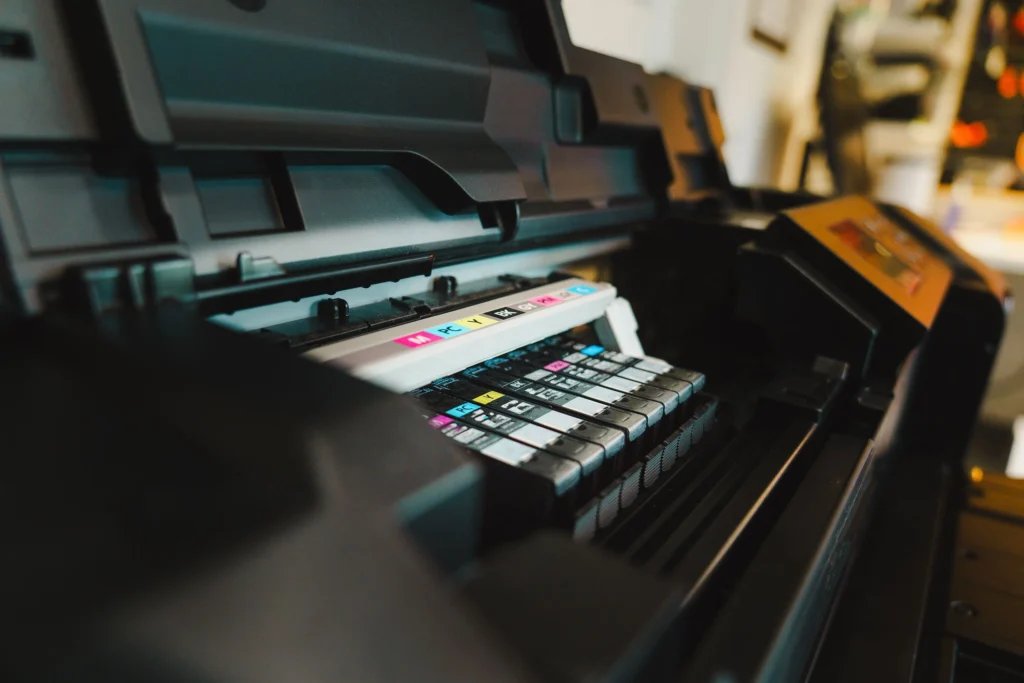
We typically have more Printer ink in stock than toner cartridges. However, with increased efficiency in production of the latter, the Toner Cartridges have become a more cost effective alternative for professionals printing in large volumes. As with anything, if you require color prints, or general quality photographs to be printed, we still would recommend using ink cartridges. However, the best option would depend on the individual’s printing frequency, requirements and budget.
What Are the Key Differences Between Printer Ink and Toner?
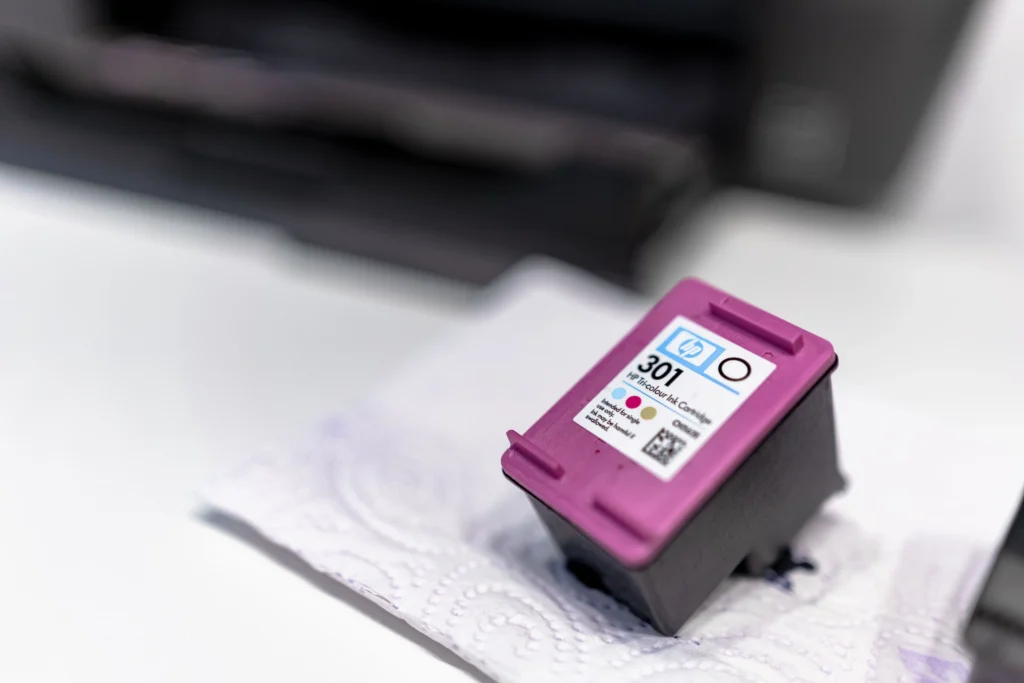
The main difference between printer ink and toner is the composition of the print material and how it is directed by the printer’s components. The majority of inkjet printers use liquid ink which is sprayed from fine nozzles, and the laser printer uses powdered toner which is fused to the paper using heat. This difference determines, amongst other things, the print quality, print speed and the long-term print costs.
Composition and Printing Mechanism
Printer ink is a liquid consisting of dyes or pigments. It is applied directly to paper fibers by the printhead to create images with lots of colors and shades. Toner, on the other hand, is a very fine powder made up of small plastic resin particles and pigment. An image is written on a drum using a laser and then transferred to the page where it is then fixed in place using heat. This type of printing produces crisp text and long lasting prints that don’t smudge.
Print Quality and Durability
Inkjet printers deliver superior color blending and tonal range, making them suitable for graphic designers or photographers who need precise color reproduction. However, prints can fade or smear if exposed to moisture. Toner-based prints maintain clarity even after years of storage because the fused powder bonds firmly with the paper surface. For documents requiring longevity—contracts, invoices, reports—toner offers greater stability.
Speed and Efficiency
Laser printers using toner generally have a better performance than inkjet printers as they are much faster as they can print up to 30 pages per minute compared to 10–15 pages per minute typical for most inkjet printers. Also in offices where print volume is high the toner cartridges can handle the workload very well without needing to be replaced too often.
Which Option Offers Better Cost Efficiency?
Cost efficiency is not just about the lowest price for a cartridge but also about the yield per cartridge, maintenance costs and waste over time. A lot of users misjudge their savings by only looking at the upfront costs and not at the total cost per page.
Cartridge Yield and Replacement Frequency
Compare this to a standard ink cartridge with a print yield of 200-400 pages. The same toner cartridge can print up to 2,000 pages. Although toner is initially more expensive, as the number of pages printed by a month increases, the cost per page of toner falls dramatically and, for large volume users, is usually more cost effective than ink.
Maintenance and Waste Management
Many inkjet printers have to go through regular cleaning cycles to prevent the nozzles from clogging. This can cost a lot of ink and a lot of time. Toner systems on the other hand do not need the same kind of maintenance, because the powder does not dry. Also spent toner cartridges are a lot easier to recycle. They can be returned to the manufacturer and then the plastic of the cartridge is used again to make new cartridges.
Long-Term Ownership Costs
When comparing the energy consumption and durability of components of lasers and inkjet printers, lasers have a clear advantage. The components of laser printers are much more durable than the delicate inkjet print head. Drying out, misalignment, clogged nozzles – these are all problems that can quickly affect printing quality with an inkjet printer. A detailed comparison of the costs of ownership for three years of printing 1,000 pages per month, gives laser printers a clear advantage of 30 – 40% over equivalent models from inkjet printers.
How Do Environmental Factors Influence the Choice?
Sustainability is becoming an increasingly important consideration when buying printers in order to help organizations and their workflows become ‘greener’ without sacrificing performance.
Energy Consumption
Comparing energy consumption to printing pages, Laser Printers have higher absolute energy during printing because of the high-temperature fusing process, but relatively low during standby. However, Inkjet Printers have low absolute energy per printed page, but very high energy for warm-up cycles, and these cycles occur much more frequently in high-demand printing environments.
Cartridge Recycling Programs
There are recycling programs from major brands like HP’s Planet Partners or Canon’s Cartridge Return Program for recycling technologies. Because of their sturdy design toner cartridges can be recycled in higher rates of success than ink tanks which are sensitive, fragile and prone to leakage while being transported for recycling.
Material Waste Reduction
Increased lifetime of the toner cartridges lead to a significant reduction of packaging waste compared to small quantities of ink to be used on a regular basis. This aspect is often mentioned in sustainability reporting of companies trying to get certified according to ISO 14001 environmental management systems.
When Should Professionals Still Choose Printer Ink?
Although toner is by far the most productive technology available, printer ink remains a better option for many professionals who require high quality print, even if that means fewer pages.
High-Resolution Photo Printing
We recommend pigment-based inks to photographers for the best reproduction of gradients on glossy media such as photo paper or canvas. With pigment-based inks the printing medium is a liquid which allows for the most precise placement of single droplets measured in the picoliters. This is far beyond what can be achieved with powder-based printing systems.
Color Accuracy for Design Work
For graphic designers using color of the highest brand-critical standards, the wide-gamut inks are able to accurately match Pantone shades. Laser toners on the other hand do not have sufficient ability to create the fine gradations in tonal value, due to the nature of the powder fusion process and the lack of color layers that can be created.
Compact Home Office Use
Inkjet printer models continue to be an option for those that require printing on occasion in smaller spaces. They provide the consumer with a quieter operating printer, as well as a lower upfront cost to purchase the printer, to begin printing. These inkjet printers are also very versatile for those that have mixed tasks that require printing, as well as tasks such as scanning and copying. They do not require the large footprints of many of the laser printers on the market today.
What Are the Latest Innovations in Printer Ink Technology?
There are recent developments to overcome the performance gap of traditional printing inks and toners by improved chemistry and smart printing cartridge design.
Pigment-Based Inks with Extended Longevity
Recent formulations of pigment inks by manufacturers are made to be UV fade resistant and are rated for archival quality for decades, and are as permanent as laser printing for legal or museum archival applications, when stored properly.
Smart Cartridges with Integrated Chips
The modern toner and ink cartridges, which contain a microchip, can also track the correct usage levels and are reported via a cloud-based dashboard. The user is then alerted as to when they require a re-supply thus minimizing down-time and aiding the correct management of inventory for large enterprise networks.
Hybrid Printers Combining Inkjet Precision with Laser Speed
There are now emerging models of printers which use solid-state inks which are cured by LED lighting rather than the traditional heat fusion or liquid evaporation methods. These ‘hybrid’ printers are now capable of printing at near laser speeds whilst also producing photo-quality prints – something that was once thought to be impossible.
How Does Print Volume Affect the Decision Between Ink and Toner?
Print volume can be the single biggest deciding factor when it comes to choosing the right printing technology to use, whether in education or in logistics.
Low-Volume Home Printing Scenarios
For users printing fewer than 100 pages monthly—mostly photos or personal documents—inkjets remain practical despite higher per-page costs since cartridges won’t expire quickly under light use patterns.
Medium-Volume Small Business Operations
Companies producing up to 1,500 pages monthly should evaluate multifunction laser units offering duplex scanning alongside monochrome output efficiency; these strike balance between affordability and reliability without excessive waste.
High-Volume Corporate Environments
The vast majority of organizations with more than 5,000 pages per month print run are best served with networked laser printers as part of a Managed Print Services contract that provides them with fixed cost printing to utilize the benefits of buying toner in very large quantities over extended periods and have it sent to them as required as opposed to buying it in the retail store in smaller quantities on an ad hoc basis.
FAQ
Q1: Does printer ink expire faster than toner? A1: Yes. Because liquid inks dry up after months if not used from time to time, they expire way faster than sealed toner powder which doesn’t degrade within years.
Q2: Can one obtain photo-quality results using toner? A: No not entirely. Even the latest color laser can only achieve very vibrant results but are not as deep as images printed with high resolution pigment inks on coated papers.
Q3. Which of the following options would better serve employees that work remotely from home and thus from a home desk as opposed to from a shared office floor as does Milsberry? A. Compact wireless inkjets. These printers will have low noise so that they don’t be a disturbance while working from home and they are compact for the smaller amount of space that a home desk has to put a printer on as opposed to the amount of space that a large laser printer for printing in mass takes up on a shared office floor.
Q4: How reliable are refillable cartridges? A: Refillable systems reduce waste but unsealed can leak whereas an OEM-certified refill system is generally more reliable but costs a bit more.
Q5. For Schools & Libraries – what is the best choice? A. Laser Printers using Toner. This durable option can take daily heavy use and save you money in the long run as you print thousands of Black & White pages each week.