Why Is a Blue Pen Still the Best Everyday Writing Tool?
Why Does a Blue Pen Still Feel So Useful?
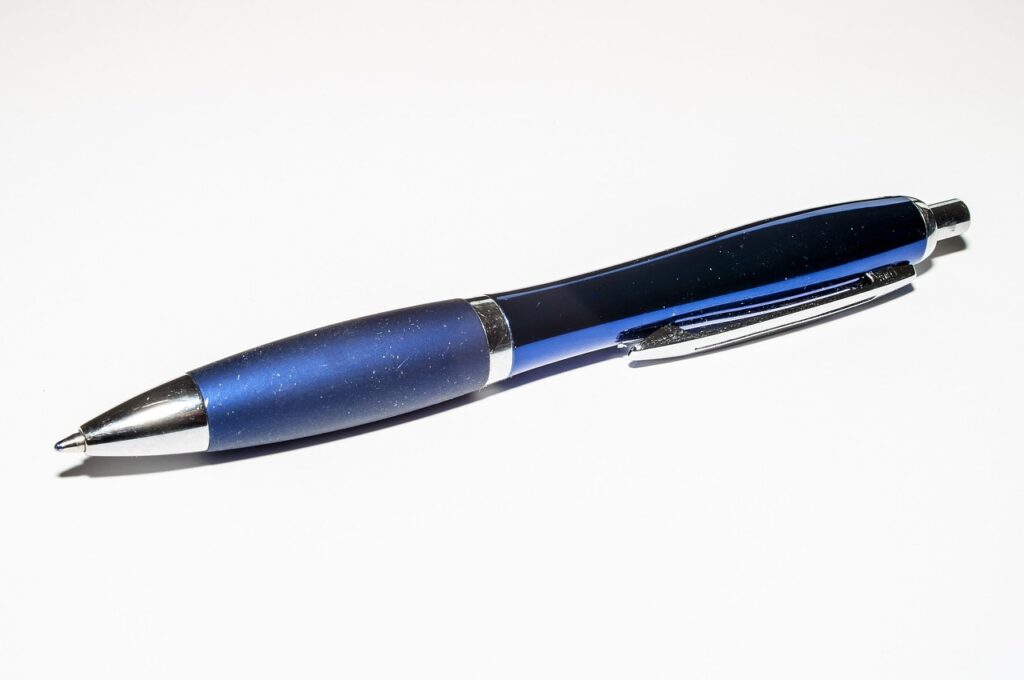
A blue pen is a basic item, but it handles a small job people deal with every day: making handwriting clear, easy to pick out, and simple to check. When you buy for a classroom, office desk, reception counter, or home study area, the right blue pen does not need to feel special. It just needs to write when someone picks it up. If you are putting together a wider stationery order, you can also compare more writing options in the pens category.
A Clear Color for Daily Notes
Blue ink looks a little lighter than black ink, but it still shows clearly on white or cream paper. That helps when someone checks a planner at the end of the day, marks a list in a warehouse, or writes down a phone number during a busy call. The page stays easy to read, and the writing does not get lost.
Quick Visual Separation from Black Print
Many printed forms, labels, invoices, and worksheets are printed in black. A blue pen makes the handwritten part stand out from the printed text. That is one reason many people still choose blue ink for paper forms. It shows that the details were filled in by hand, not copied from the original print.
A Familiar Choice for Forms and Signatures
Blue ink is accepted in many normal business situations, though each company or organization may have its own rule. If a legal, banking, medical, or government document gives a clear instruction, follow that instruction first. For regular office paperwork, blue is still a familiar choice. It is also useful when a signature needs to be found quickly on a printed page.
Where Does a Blue Pen Work Best?
The best pen is not always the one with the nicest look or highest price. It is the pen that fits the job. A classroom needs something that holds up, a meeting room needs comfort, and a front desk needs a pen that can pass through many hands in one day.
Classrooms, Notes, and Study Planners
Schools are still one of the biggest daily-use places for basic writing tools. The National Center for Education Statistics reported in December 2024 that U.S. public preK–12 enrollment reached 49.5 million students in fall 2023. That gives some scale to the market: many students write notes, solve problems, and label folders every school day. For school supply buyers, simple stationery still moves in large numbers. (nces.ed.gov)
Office Desks and Meeting Rooms
Office work has changed, but handwriting has not gone away. The U.S. Bureau of Labor Statistics reported on June 25, 2026 that, in 2025, 35% of employed people did some or all of their work at home on days they worked. So pens now move between home desks, office desks, bags, cars, and shared meeting rooms. A steady blue pen fits that kind of split work setup well. (bls.gov)
Retail Counters and Reception Areas
At a counter, a pen gets picked up all day. Customers sign receipts, delivery staff mark forms, and visitors write names on logs. In these places, a medium-tip blue ballpoint with a cap or click mechanism is usually enough. It should write cleanly, sit safely in a cup holder, and not leak onto the desk.
Which Blue Pen Type Should You Choose?
Blue ink can feel very different from one pen type to another. Before buying only by unit price, check how much pressure it needs, how smoothly it writes, how fast it dries, and what paper it will be used on most often.
Ballpoint Pens for Long Shelf Life
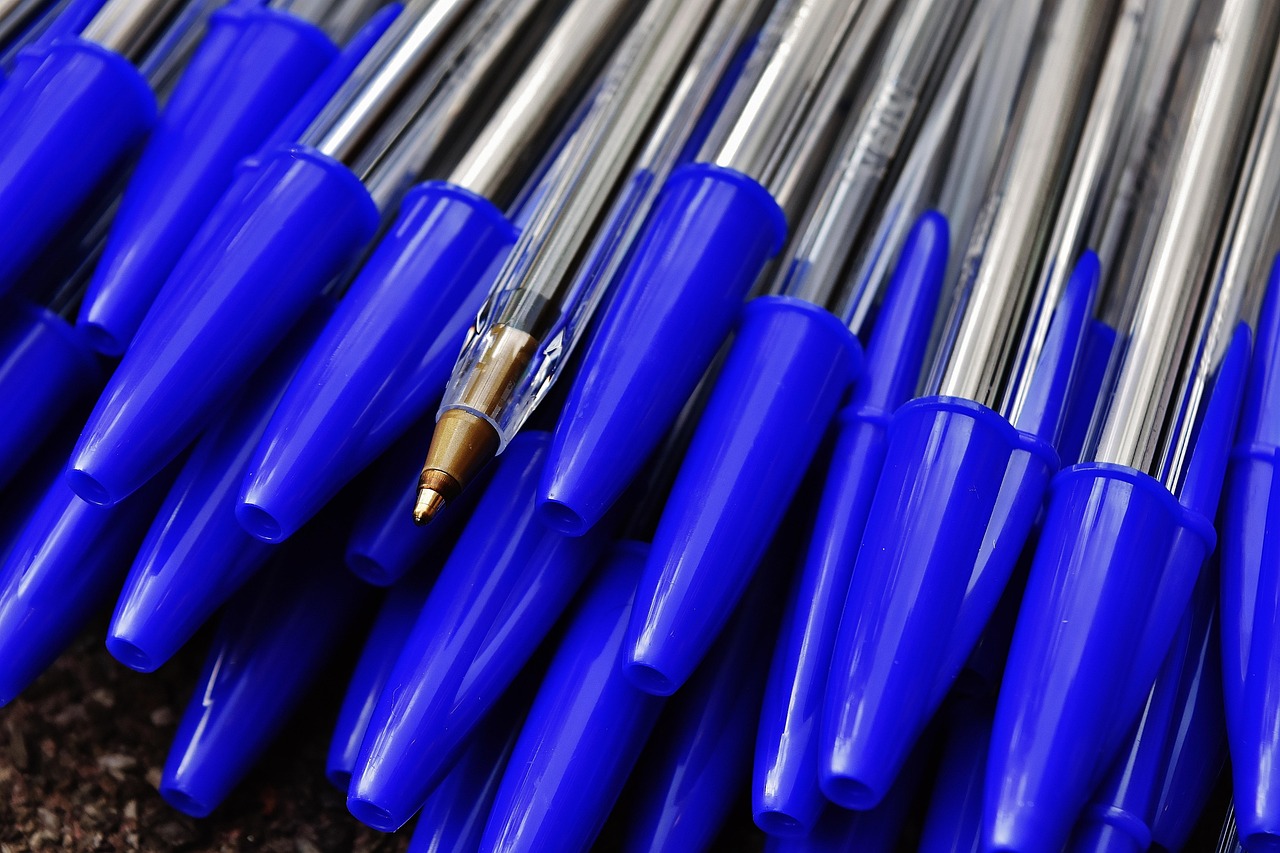
A blue ballpoint pen is often the safest choice for bulk orders. Its oil-based ink works on many paper types, dries fast, and usually stores better than wetter ink systems. It may need a little more hand pressure than gel or rollerball pens. For offices, warehouses, schools, and travel kits, that trade-off is often acceptable.
Gel Pens for Smooth, Dark Lines
Blue gel pens are popular because the line looks dark and neat. They also feel smooth during longer writing, which helps with study notes, journal pages, and client follow-up lists. The main point to watch is drying time. If the user is left-handed or the paper is glossy, test a page first. That small test can prevent smearing after a large box is ordered.
Rollerball Pens for Faster Writing
Rollerball pens use wetter ink, so they move across paper with less pressure. They feel good for signatures and long notes, especially when the writer wants a lighter touch. The downside is that they can bleed through thin paper or feather on cheap forms. If your team uses copy paper, notebooks, and delivery sheets, test a few common pages before buying in volume. Paper quality changes the writing feel more than many buyers expect.
What Details Matter Before You Buy?
Small pen details do not look important until someone writes for twenty minutes or a buyer orders five hundred pieces. Checking the basics helps avoid scratchy lines, smudged hands, and pens that end up sitting unused in a drawer.
Tip Size and Line Control
Tip size affects both the look of the line and how much ink the pen uses. A 0.5 mm tip gives a fine line for planners and small handwriting. A 0.7 mm tip works well for general office notes. A 1.0 mm tip is bold and easy to see, but it may use ink faster. For mixed users, 0.7 mm is usually the safer middle choice.
Ink Drying and Smudge Risk
Drying time matters more than some people think. On standard copy paper, ballpoint ink usually behaves well. Gel and rollerball ink can look better, but they may smear if the writer turns pages quickly. For schools and front counters, a quick-dry blue pen can be worth a small price difference. Smudged forms waste time and make paperwork look untidy.
Grip Shape and Barrel Weight
Comfort is not only about a soft rubber grip. A barrel that is too thin can tire the fingers, while a heavy metal pen may feel good for signatures but not for class notes. Before buying in bulk, it helps to check a few plain points: See also: Gift Guide.
- Can the pen write smoothly after sitting unused for a few days?
- Does the grip feel stable with dry or slightly damp hands?
- Can the clip survive bags, pockets, and desk cups?
- Does the ink shade match your brand or school preference?
How Can Businesses Buy Blue Pens More Smartly?
Bulk buying is not only about the lowest unit price. A low-cost pen that skips, leaks, or cracks can cost more in the end because staff stop using it. Good buying starts with how the pen will be used, not with a nice catalog photo.
Match the Pen to the User
For students, choose a light pen with a cap or click system that works reliably. For reception desks, choose one that starts writing right away and still looks clean after many people use it. For sales teams, a smoother blue pen can make handwritten notes feel more personal. That detail may seem small, but the customer will see the note later. The pen should fit that moment.
Check Packaging for Storage
Pens kept in a hot cabinet, warehouse shelf, or delivery van can dry out faster if the packaging is weak. Keep bulk pens sealed until they are needed. Store them away from heat, and use older stock first. This is basic supply room practice. Even so, it is often missed when stationery is ordered in large quantities.
Plan Bulk Orders Around Real Use
The U.S. Census Bureau reported that adjusted U.S. retail e-commerce sales reached $326.7 billion in the first quarter of 2026 and made up 16.9% of total retail sales. For stationery buyers, the point is simple: online buying is now normal. Product pages should clearly show tip size, ink type, pack quantity, and use case before the order is placed. (census.gov)
Can a Blue Pen Support Better Note Taking?
A pen will not do the thinking for the user. Still, writing by hand can affect how people handle information. A simple way to use that benefit is to write fewer words, keep the main points, and leave space for comments later.
Handwritten Notes Encourage Active Filtering
A 2014 Psychological Science study by Pam Mueller and Daniel Oppenheimer reported that laptop note takers often wrote more verbatim notes. In the same study, longhand note taking encouraged more processing and reframing in the writer’s own words. This is a useful habit, not a magic rule. A blue pen helps most when the writer summarizes instead of copying every sentence. (pubmed.ncbi.nlm.nih.gov)
Paper Tools Fit Hybrid Work
A 2021 Frontiers in Behavioral Neuroscience paper compared paper notebooks, tablets, and smartphones in a schedule-recording task. The paper-notebook group recorded information faster and showed stronger activity in memory-related brain regions during retrieval. The sample and task were specific, so the takeaway should stay practical. Paper notes can still work well beside screens. (frontiersin.org)
Simple Color Coding Reduces Friction
Blue works well as a main writing color because it does not clash with red corrections, black printed text, or highlighter marks. The system does not need to be complicated. Use blue for notes, red for fixes, and black for final labels. That is enough for many desks, classrooms, and counters. If a color system takes longer than the work itself, people will stop using it.
FAQ
Q1: Is a Blue Pen Better Than a Black Pen? A: It depends on the task. Blue is better when handwriting needs to stand out from black print. Black is better for a formal and uniform look.
Q2: What Tip Size Is Best for a Blue Pen? A: A 0.7 mm tip is a good everyday choice. Choose 0.5 mm for small handwriting and 1.0 mm for bold, easy-to-see notes.
Q3: Should You Choose Ballpoint, Gel, or Rollerball? A: Choose ballpoint for bulk use and quick drying, gel for smooth dark lines, and rollerball for fast writing with light pressure.
Q4: Can You Use a Blue Pen for Signatures? A: In many everyday settings, yes. For official forms, always follow the instruction printed on the document or given by the organization.
Q5: Is There Reliable Public Data on Blue Pen Sales Alone? A: No reliable public source was found that breaks pen demand down by blue ink alone. Broad school, work, and e-commerce data can show market context, but not exact blue pen sales.