How to choose a marker pen for paper, boards, fabric and packaging
What a marker pen is really for
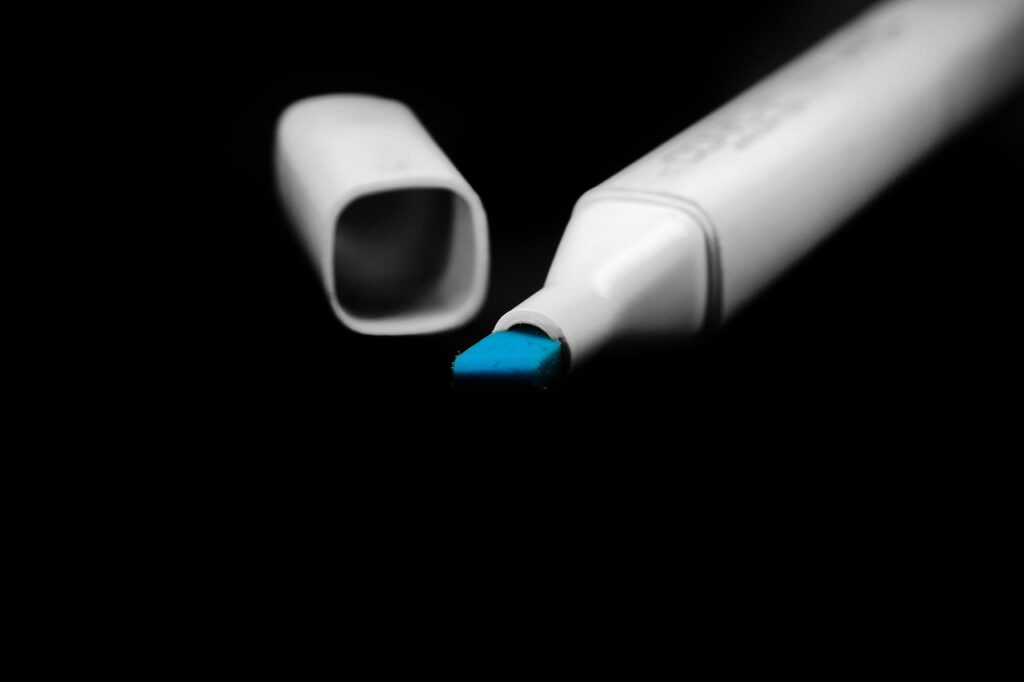
A marker pen is more than a thicker version of a regular pen. It is a writing and marking tool built around a porous tip, a larger ink reservoir and an ink formula selected for visibility, coverage and surface compatibility. The right marker pen depends less on color alone and more on where the mark has to perform: paper, cardboard, whiteboards, glass, plastic, fabric, metal or shipping cartons.
For everyday buying, the most reliable approach is to match three factors: ink type, tip shape and surface. Water-based markers suit paper, school and washable applications. Alcohol-based markers dry quickly and are useful for illustration and blending. Permanent and paint markers are common for packaging, labeling and non-porous surfaces, but they call for more attention to ventilation, drying time and storage.
This guide explains the practical differences so buyers, office teams, teachers and craft users can choose a marker with fewer smears, less bleed-through and better long-term results.
How a marker pen works
Most marker pens use the same basic structure: a barrel, an absorbent ink reservoir, a feed system and a porous nib. When the tip touches a surface, ink moves by capillary action from the reservoir to the nib and then transfers to the writing surface. This simple design is why marker pens can produce bold lines quickly. It also explains common problems such as drying out, bleeding, feathering and inconsistent color.
The ink formula is the main performance factor. A dye-based ink can look bright and transparent, which helps with coloring, highlighting and blending. A pigment-based ink contains tiny color particles and may provide better opacity, especially in paint markers and some archival or technical markers. The solvent or carrier also matters. Water-based inks are easier to clean from many surfaces before they set. Alcohol-based inks usually dry faster and can create smoother color transitions. Oil-based and paint-style markers can cover darker, glossy or rough surfaces, but they often require shaking, priming and careful storage.
For more writing instrument topics, explore the Pen section on upyueping.com.
Main types of marker pens and where they fit
The term marker pen covers several product families. They may look similar on a desk, but they are made for different surfaces and working conditions. Choosing by marker type is usually more dependable than choosing by color set size alone.
| Marker type | Typical ink system | Common surfaces | Main strength | Key limitation |
|---|---|---|---|---|
| Water-based marker | Water-based dye or pigment | Paper, card, notebooks, posters | Low odor and suitable for many school or office tasks | Can wrinkle thin paper or smear before dry |
| Alcohol-based marker | Alcohol carrier with dye or pigment | Marker paper, illustration paper, design pads | Fast drying, smooth blending and strong color | Often bleeds through ordinary paper |
| Permanent marker | Solvent-based or quick-drying ink | Cardboard, plastic, metal, glass, labels | Good adhesion on many non-porous surfaces | Odor and removal can be an issue |
| Paint marker | Oil-based or acrylic paint-style ink | Wood, stone, metal, glass, plastic, dark surfaces | Opaque marks and decorative coverage | Requires priming and longer drying time |
| Dry erase marker | Special ink for erasable boards | Whiteboards and some non-porous boards | Clear writing that can be wiped away | Not intended for permanent labeling |
| Fabric marker | Textile-compatible dye or pigment | Cotton, canvas and some blended fabrics | Designed to bond with fibers | Results depend on fabric content and washing method |
For general office labeling, a permanent marker is often the familiar choice. For classroom posters and children’s drawing, water-based markers are usually more practical. For design sketching, alcohol-based markers are valued because they lay down color evenly and allow blending. For crafts, packaging prototypes and industrial-style labeling, paint markers can be useful when an opaque line matters more than speed.
Match the marker pen to the surface
Surface compatibility is where many marker problems start. Paper, cardboard, plastic, glass and fabric all absorb or resist ink differently. A marker that looks excellent on poster board may smear on glossy tape. A permanent marker that writes clearly on a shipping carton may bleed through thin notebook paper. A paint marker that looks bold on black cardboard may be too slow for everyday note taking.
Paper and notebooks
For standard paper, water-based markers and fine-tip felt markers are usually the safer starting point. They provide color without the heavy bleed-through associated with many alcohol-based markers. Thin paper can still feather or wrinkle if the ink flow is strong. If the task involves illustration, lettering or color layering, use marker paper or heavier cardstock rather than ordinary copier paper.
Whiteboards and presentation boards
Whiteboards need dry erase markers, not permanent markers. The two products can look similar, but the ink systems are different. Dry erase ink is designed to sit on the board surface and wipe off. Permanent ink is designed to adhere, so using it on a whiteboard can create a cleaning problem. For classrooms and meeting rooms, keep dry erase markers separate from permanent markers and choose caps or barrels that are visually distinct.
Plastic, glass and metal
Non-porous surfaces need inks that can grip without soaking in. Permanent markers and paint markers are commonly used here, but drying time and surface cleanliness matter. Dust, oil or moisture can reduce adhesion. For long-term labeling on containers, glossy packaging or metal tools, test a small area first and allow the mark to dry fully before handling.
Fabric and soft goods
Fabric markers are made for textiles, but results depend on fiber content, weave, pre-washing and laundering. A general permanent marker may write on fabric, yet it can bleed along the fibers or fade unevenly. For clothing, tote bags or craft textiles, a fabric-specific marker is the better category because it is designed for that purpose.
Tip shape and line width matter as much as ink
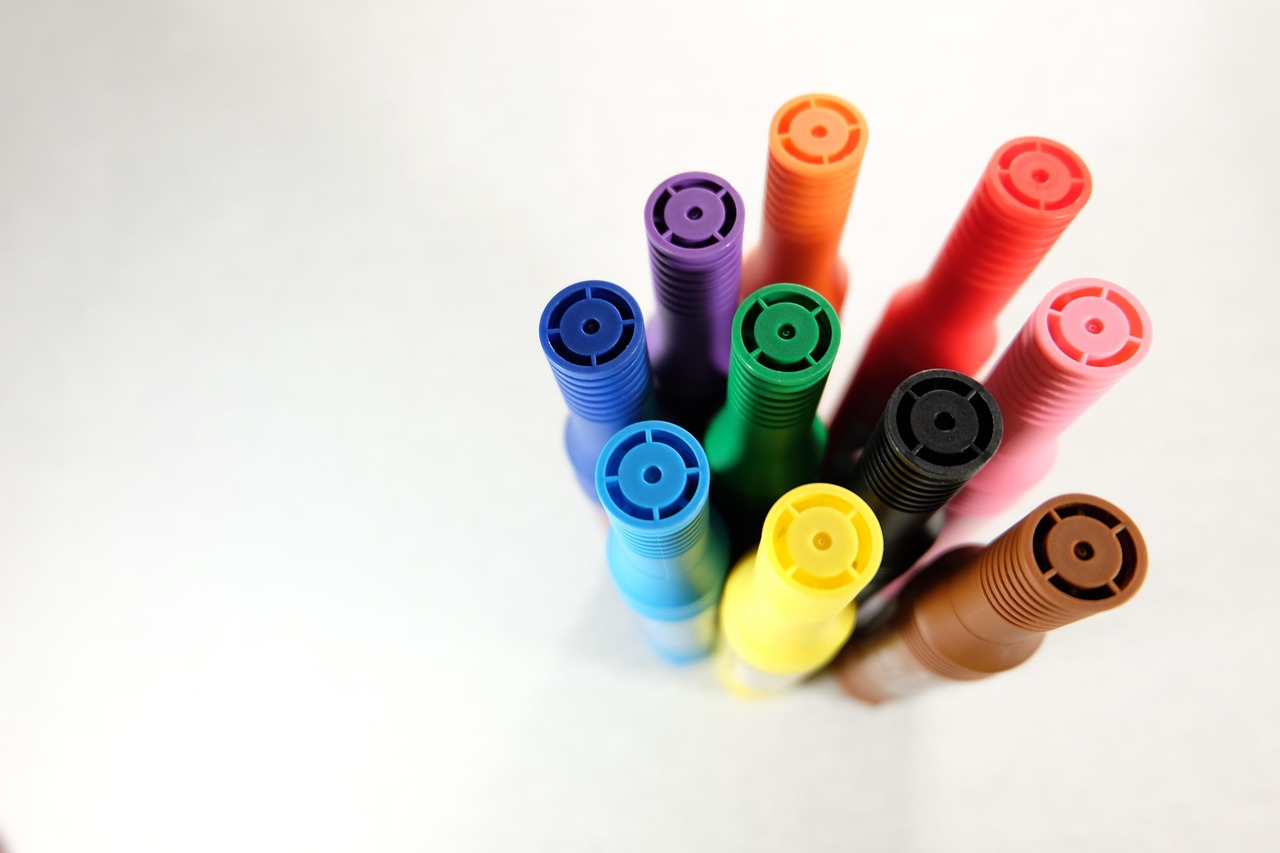
The nib determines how controlled the mark feels. A fine bullet tip works well for labels, classroom worksheets, planners and small notes. A medium bullet tip suits everyday writing on cartons, folders and signs. A chisel tip can create both broad and narrow strokes, which makes it useful for headings, posters and whiteboard presentations. Brush tips are preferred for lettering and expressive drawing because line width changes with pressure and angle.
Line width should match reading distance. A small label on a file tab needs a fine or extra-fine tip. A classroom poster needs a broader tip. A warehouse carton or event sign needs a line that remains legible from several feet away. In purchasing decisions, this is often more important than the total number of colors in the pack.
Tip durability also varies. Firm bullet tips tolerate everyday labeling better than delicate brush tips. Chisel tips are versatile but can fray if pushed into rough cardboard. Paint marker tips may clog if the cap is left off or if the marker is stored incorrectly. When markers are shared in offices, schools or studios, a tougher nib style can reduce waste. See also: Gift Guide.
Safety, labeling and indoor use
Marker pens are everyday stationery items, but they are still chemical products. The safety question is not simply whether a marker is described as non-toxic. It is whether the product is appropriate for the user, age group, surface and environment. In the United States, the Consumer Product Safety Commission explains that consumer art materials are subject to the Labeling of Hazardous Art Materials Act and related ASTM D-4236 labeling practice when sold as art materials. This framework focuses on toxicological review and proper hazard labeling for chronic health risks.
Another label sometimes seen on art and craft materials is the ACMI AP seal. ACMI describes AP-certified products as evaluated by a toxicologist and labeled as non-toxic for their intended use. A different cautionary label indicates that the product can be used safely when directions are followed but is not the same as an AP non-toxic designation. For schools, children’s projects and shared art rooms, these distinctions are worth checking rather than relying only on marketing language.
Ventilation is also important, especially for permanent, alcohol-based and paint-style markers. The U.S. Environmental Protection Agency lists permanent markers among examples of household or graphics and craft products associated with volatile organic compounds. This does not mean every marker has the same risk profile, but it supports a practical rule: use stronger-smelling markers in well-ventilated areas, close caps promptly and follow the product label.
- Choose washable or water-based markers for young children when the activity allows it.
- Use permanent and paint markers away from flames and with good airflow.
- Read age grading, warning statements and intended-use language on the package.
- Do not use decorative markers on skin, food-contact surfaces or toys unless the product specifically says that use is appropriate.
- Store markers capped, out of direct heat and away from unsupervised small children.
Storage, maintenance and common buying mistakes
A marker pen usually fails for one of four reasons: the tip dries out, the ink separates, the wrong marker is used on the wrong surface, or the cap is not sealed after use. Good storage is simple but effective. Keep caps tight, store most standard markers horizontally if the manufacturer does not specify otherwise, and keep paint markers according to package directions. Some paint markers contain mixing balls and need shaking before use; some require the nib to be pressed down for priming.
One common mistake is buying the largest color set without checking the surface. A 60-color alcohol marker set may be excellent for illustration but frustrating on ordinary office paper because of bleed-through. Another mistake is assuming permanent means impossible to remove. Permanent markers are designed to resist casual wiping, but solvents, abrasion, surface type and outdoor exposure can still affect the mark. For outdoor or high-wear labeling, choose a marker specifically described for that environment and test before committing.
A third mistake is using one marker for every department or task. Offices, classrooms, warehouses and craft rooms often need different marker categories. A practical mixed kit might include water-based markers for paper, dry erase markers for boards, permanent markers for cartons and labels, and a small set of paint markers for dark or hard surfaces. This reduces misuse and often saves money because each marker is used where it performs best.
A practical marker pen selection checklist
Before buying a marker pen, answer a short set of questions. This creates a more reliable decision than choosing by packaging design or color count alone.
- What surface will be marked? Paper, board, plastic, glass, fabric and metal require different ink behavior.
- Should the mark be removable? Choose dry erase for whiteboards and permanent or paint markers for durable labeling.
- How bold does the line need to be? Fine tips work for labels; chisel and broad tips work for signs and presentations.
- Will the marker be used indoors for long periods? Consider odor, ventilation and user sensitivity.
- Is the user a child, student, office worker, artist or warehouse team? Age grading and intended use matter.
- Does the package show relevant safety or conformance labeling? For art materials in the U.S., look for ASTM D-4236 language and appropriate warnings.
- Will the mark face handling, moisture or sunlight? Test durability before using the marker on important items.
The simplest rule is to buy for the main task, not the most unusual task. A classroom marker should be low-odor and paper-friendly. A shipping marker should be bold and resistant to casual handling. An illustration marker should match the paper and blending style. A craft marker should match the material and drying requirements.
Frequently asked questions
Is a marker pen the same as a felt-tip pen?
The terms overlap, but they are not always identical. A felt-tip pen usually refers to a pen with a porous fiber tip for writing or drawing on paper. A marker pen is often broader and may include permanent, dry erase, paint, fabric and high-coverage versions for many surfaces.
Which marker pen is best for labeling cardboard boxes?
A medium or broad permanent marker is usually suitable for cardboard boxes because it writes clearly and dries quickly on porous packaging material. For coated or glossy cartons, test first because some surfaces resist ink or cause smearing.
Why does my marker bleed through paper?
Bleed-through happens when ink penetrates the paper fibers and reaches the other side. Alcohol-based markers and heavy-flow markers are more likely to bleed through thin paper. Use heavier paper, marker paper or a water-based marker when bleed-through is a concern.
Are permanent markers safe to use indoors?
Many permanent markers are intended for normal indoor use when directions are followed, but they can have a stronger odor than water-based markers. Use them with good ventilation, close caps after use and follow product warnings, especially in classrooms, studios or shared workspaces.
How can I keep marker pens from drying out?
Replace the cap immediately after use, store markers away from heat and sunlight, and follow the manufacturer’s storage directions. For paint markers, shaking and priming may be needed, but leaving the nib uncapped is still the fastest way to shorten the marker’s life.