Pen highlighter guide for notes, planning, and everyday marking
What a pen highlighter is and when it makes sense
A pen highlighter is a compact writing and marking tool used to emphasize text with more control than a broad, traditional highlighter. It is useful for clean underlines, small marks, color-coded notes, planner details, and everyday review work where a full-width chisel stroke may be too much. For students, office users, journal keepers, and stationery buyers, the key question is not only whether the color is bright. The better question is whether the tip, ink flow, color, and paper compatibility fit the way the tool will be used.
In everyday stationery language, the term can cover several related products: slim highlighters shaped like pens, dual-tip pen-and-highlighter combinations, fluorescent gel highlighters, and fine-tip markers used for highlighting. That variety is useful, but it can make buying decisions less straightforward. A tool that works well in a textbook may feel too broad in a planner. A soft gel highlighter that helps reduce bleed-through may feel too waxy for precise margin notes. A very bright ink may stand out clearly but make small text harder to read on thin paper.

This guide looks at pen highlighters by use case rather than color alone. It focuses on the practical trade-offs that affect daily use: tip shape, ink type, drying behavior, line width, portability, and how the mark interacts with printed text or handwritten ink.
How pen highlighters differ from standard highlighters and marker pens
The easiest way to understand a pen highlighter is to compare it with the tools it overlaps with. A standard highlighter is usually made for fast coverage across full lines of printed text. A marker pen is usually made for stronger color, labeling, illustration, or general marking. A pen highlighter sits between those categories. It keeps the emphasis function of a highlighter but often adds a slimmer body, finer tip, or more controlled ink delivery.
This difference matters because highlighting is not always a broad stroke. Many users need to mark a date in a planner, circle a keyword, underline a clause, add a color code to a notebook, or draw attention to one number in a printed report. In those situations, a wide highlighter can feel imprecise, while a normal pen may not provide enough visual contrast.
A pen highlighter is also convenient for users who carry a small stationery kit. Slim barrels fit more easily in pencil cases, notebook loops, desk organizers, and work bags. Combination designs can reduce the number of separate tools needed, especially when one end writes and the other end highlights.
| Tool type | Typical strength | Possible limitation | Common fit |
|---|---|---|---|
| Standard highlighter | Fast line coverage | Less precise in small spaces | Textbooks, printed packets, office review |
| Pen highlighter | Controlled emphasis and compact carry | May cover less area per stroke | Notes, planners, study guides, forms |
| Marker pen | Strong color and labeling | May be too saturated for thin paper | Labels, signs, creative work |
| Gel highlighter | Reduced bleed-through risk on many papers | Can feel less crisp than liquid ink | Bibles, thin pages, careful reading |
Key features to compare before choosing a pen highlighter
Many product pages lead with color assortment, but color is only one part of the decision. A more useful comparison starts with the parts of the tool that affect performance: tip design, ink behavior, barrel comfort, and compatibility with the paper and writing ink already in use.
Tip shape and line control
Tip shape determines whether a pen highlighter feels precise, fast, or flexible. A chisel tip can create both narrow and broad marks depending on the angle, which makes it versatile for printed text. A bullet tip gives a more consistent rounded line and can be easier for underlining, circling, and small labels. A brush-style tip can create expressive marks, but it requires more hand control and may not suit very small printed text.
For planning, margin symbols, and compact notes, a fine bullet or narrow chisel tip is usually easier to control. For textbooks and full-page documents, a broader chisel tip can save time. If the tool will be used by children or in a busy office setting, a durable tip that resists fraying is often more important than decorative flexibility.
Ink type and page interaction
Liquid highlighter ink often produces a bright, clean mark, but it can be more sensitive to paper thickness and surface coating. Gel highlighters sit differently on the page and are often chosen when bleed-through is a concern. Dry highlighting pencils are another option for delicate pages, although they do not create the same fluorescent look as many liquid products.
The most practical rule is simple: test the highlighter on the paper you plan to use. Paper weight, coating, absorbency, printer toner, fountain pen ink, gel ink, and ballpoint ink can all affect smearing, show-through, and drying time. A pen highlighter that performs neatly in one notebook can behave differently on a receipt, a photocopy, or very smooth planner paper.
Color choice and readability
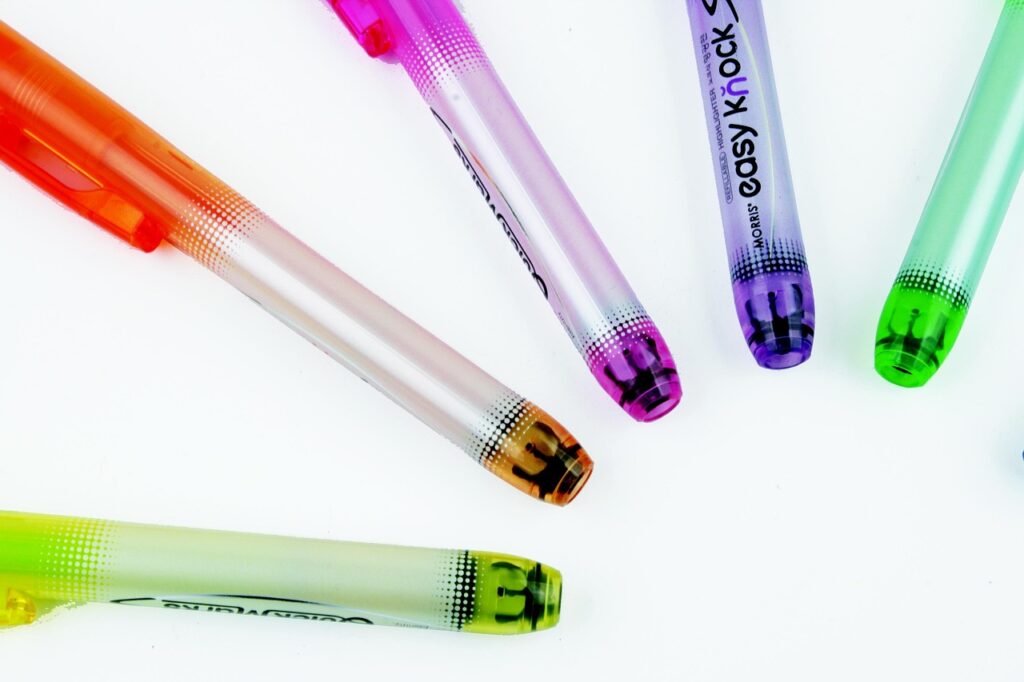
Bright yellow is popular because it is highly visible and often keeps black printed text readable. Pink, orange, green, blue, and purple can be useful for coding categories, but darker or heavily saturated colors may reduce contrast on small text. Pastel highlighters are often preferred for planners, journals, and visual notes because they add structure without overwhelming the page.
Color choice should follow the task. Use one or two colors for simple review. Use three to five colors only when each color has a clear meaning. Too many colors can make notes look organized at first but harder to scan later.
Drying time and smudge resistance
Drying time is easy to overlook until it affects the page. Left-handed writers, fast note takers, and users who highlight over fresh handwriting should pay close attention to smearing. Ballpoint writing usually behaves differently from gel pen, rollerball, or fountain pen writing. Printed ink and toner can also react differently depending on the paper and printing method.
If clean pages matter, highlight before writing when possible, or wait until the original writing is dry. For study guides and office review documents, test one line first instead of marking an entire page immediately.
Choosing by use case instead of by color set
The right pen highlighter depends on the working environment. A student annotating dense reading material needs a different tool from a planner user marking weekly pages or an office worker reviewing contracts. The same color set can perform well in one setting and poorly in another.
For students and exam review
Students usually need consistency, speed, and a system that does not turn every page into a block of color. A slim chisel pen highlighter can work well for textbooks and printed notes, while a finer tip is better for underlining formulas, dates, names, or definitions. The biggest risk is over-highlighting. If half the page is highlighted, the mark no longer shows priority.
A practical study system uses color sparingly. For example, yellow can mark core concepts, pink can mark definitions, and blue can mark examples or exceptions. The exact colors matter less than using the same meaning each time.
For planners, journals, and habit trackers
Planner users often value control and page appearance. Pastel pen highlighters, dual-tip designs, and narrow bullet tips are useful for small boxes, time blocks, habit grids, and calendar headings. Heavy ink flow may shadow through thin planner pages, so a quick back-page test is worth doing before building a full color system.
For bullet journals, a pen highlighter can work as both a functional coding tool and a design element. It can separate tasks, appointments, deadlines, expenses, and personal reminders without requiring complex decoration. See also: Gift Guide.
For office review and document handling
In office settings, readability and consistency usually matter more than decoration. A pen highlighter should make key text easy to find during review while keeping the document professional. Yellow or light pastel shades are often safer for copied or scanned documents because darker colors can reduce legibility depending on scanning settings.
When documents will be shared, archived, or scanned, avoid a color code that only one person understands. A simple system such as yellow for action items and orange for deadlines is easier for teams to follow.
For thin paper and careful reading
People who read on thin paper need to consider ink transfer, show-through, and page feel. Gel highlighters, dry highlighter pencils, or lighter-pressure techniques may work better than very wet liquid markers. No single claim applies to every book or notebook because paper quality varies widely. Testing a small mark in an inconspicuous area is the safest approach.
A practical checklist for buying a pen highlighter
Before choosing a pack, answer these questions. They narrow the choice faster than comparing color names alone.
- What will you highlight most often? Printed textbooks, office documents, handwritten notes, planners, labels, and thin book pages all behave differently.
- How much precision do you need? Choose a fine bullet or narrow chisel tip for small spaces, and a wider chisel tip for full lines of text.
- Do you need fast drying? If you are left-handed or use gel pens, smudge testing matters.
- Will the page be scanned or copied? Lighter, readable colors are usually safer than dark, saturated marks.
- Is portability important? A slim barrel or dual-ended design can reduce clutter in a pencil case or work bag.
- Do you want a color system? Buy only the colors you will consistently use. More colors are not automatically more useful.
- Can the cap be secured easily? Highlighters can dry out if left uncapped, so cap design matters for classrooms, offices, and travel.
If you are building a stationery kit around writing and marking, it is also worth browsing related pen options in the Pen category. Matching your writing pen and highlighter habits can reduce smearing and make notes easier to review.
Common mistakes that make highlighting less useful
A pen highlighter works best when it supports thinking rather than replacing it. The first common mistake is marking too much. Highlighting should identify the parts worth returning to later. If every sentence is marked, review becomes slower instead of faster.
The second mistake is using color without a purpose. Color coding works only when the meaning is stable. If green means vocabulary on one page, examples on another page, and deadlines on the next page, the system creates confusion. Keep the code simple enough to remember without a legend.
The third mistake is ignoring paper compatibility. Many users blame the highlighter when the real issue is the combination of wet ink, smooth paper, and quick marking. A short test can prevent smears, feathering, or unwanted show-through.
The fourth mistake is choosing novelty over comfort. Unusual shapes, oversized packs, or decorative colors can be appealing, but daily tools need to feel comfortable in the hand. For school, office, or long reading sessions, grip, cap security, and line consistency usually matter more than packaging.
Frequently asked questions
Is a pen highlighter the same as a regular highlighter?
Not exactly. A regular highlighter is usually designed for broad, fast marking across printed lines. A pen highlighter often has a slimmer body, more controlled tip, or dual-use design that makes it better suited to notes, planners, and smaller details.
Which pen highlighter color is best for studying?
Yellow is a reliable starting point because it is visible and usually keeps printed text easy to read. For color coding, add only a few extra colors and assign each one a clear meaning, such as definitions, examples, dates, or action items.
How can I stop a highlighter from smearing pen ink?
Let the writing dry before highlighting, use lighter pressure, and test the combination of pen, paper, and highlighter first. Gel pens, rollerballs, fountain pens, and freshly printed pages may need more drying time than ballpoint writing.
Are gel highlighters better than liquid highlighters?
They are better for some uses, not all. Gel highlighters can be useful when bleed-through is a concern, while liquid highlighters often feel brighter and cleaner for standard printed pages. The better choice depends on paper type, line precision, and the feel you prefer.
How many highlighter colors should I use?
For most note-taking systems, two to four colors are enough. A smaller color set is easier to remember and keep consistent. Large color sets are useful only when the extra colors serve a real purpose.
Final thoughts on choosing a pen highlighter
The best pen highlighter for everyday use is the one that matches your page, writing style, and reason for marking. For dense reading, prioritize readability and restraint. For planners, prioritize precision and page appearance. For office documents, prioritize professional contrast and consistent meaning. Color matters, but it should come after tip control, ink behavior, drying time, and paper compatibility.
A good pen highlighter does more than make text brighter. It makes information easier to find, compare, and remember. When chosen carefully and used with a simple system, it becomes a small tool that improves the way notes, schedules, and documents work.