How Do You Choose the Best Sketch Pen for Clean Lines and Bold Color?
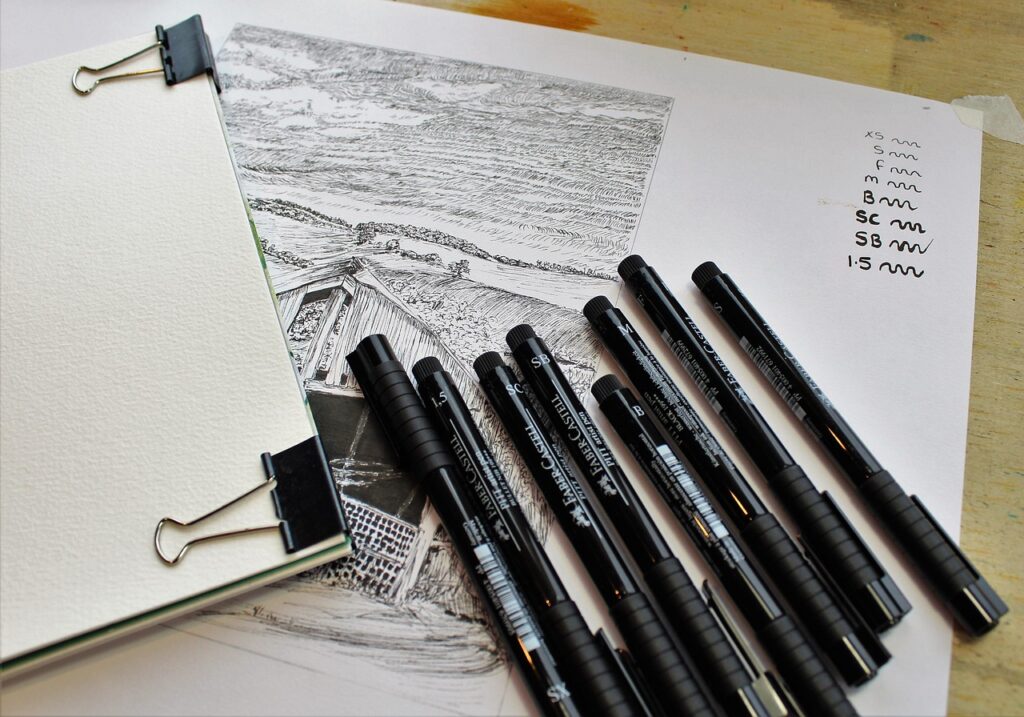
What Makes a Sketch Pen Worth Buying?
A sketch pen is a small item, but buyers see the problems quite fast when the details are wrong. The tip may drag, the ink may dry out, the color may bleed through a notebook, or a filled area may look uneven. If you compare pens for school kits, office stationery, art sets, or retail shelves, start with the job, not only the unit price. For related writing and drawing items, you can also browse the Pen collection.
Demand is not just from hobby users. Grand View Research, in its 2026 public writing instruments market overview, estimated the global writing instruments market at USD 19.2 billion in 2025 and projected USD 27.8 billion by 2033, with a 4.8% compound annual growth rate. That matters for sourcing because a sketch pen is not only a small add-on item. It sits in a large category where buyers check safety, color, shelf look, and repeat performance before they place orders.

Tip Shape Sets the Drawing Feel
The tip is the first part your customer feels on paper. A fine tip works for outlines, school diagrams, small labels, manga-style line work, and planner pages. A bullet tip is easier for younger users because it gives a stable line even when the hand angle changes. A brush tip can make thick and thin strokes, but it needs good tip recovery, or the point starts to fray after a few pages.
Ink Flow Should Stay Even
A good sketch pen should start without shaking, long scribbling, or hard pressure. The line should not flood at the first stroke and then fade after a short time. For bulk buying, ask for samples from the same production style you plan to order, then test quick strokes, slow outlines, dots, and filled squares. It may feel a little too detailed, but one dry color in a 24-color set can make the whole pack feel low grade.
Color Range Needs Real Use Value
A high color count helps a pack get attention, but the colors still need to be useful. School users need clear red, blue, green, yellow, orange, purple, black, brown, and several skin or nature tones. Hobby users often look for soft pastels, grays, and blendable shades. If two colors look almost the same on paper, the set may look big on the package but feel limited in daily use.
How Can You Match a Sketch Pen to Paper?
Paper changes how a sketch pen behaves more than many buyers expect. The same ink can look clean on a smooth sketchbook page and messy on thin copy paper. Before choosing a sketch pen, confirm where the end user will draw, such as notebooks, greeting cards, coloring books, kraft tags, planner stickers, or thick art paper.
GSM Gives a Quick Paper Clue
Paper weight is often shown as GSM, meaning grams per square meter. ISO 536:2019 is the international standard for determining paper and board grammage, according to ISO. In plain sourcing terms, heavier paper often handles wetter ink better, though coating and fiber structure still affect the result. A 120 GSM sketchbook page is usually safer for color work than a thin school worksheet, but testing is still better than guessing.
Smooth Paper Keeps Lines Cleaner
Rough paper can pull fibers into a felt tip and make the line look fuzzy. Very glossy paper may slow drying and cause smears. Smooth, uncoated drawing paper usually works well with water-based sketch pens. For alcohol-based pens, bleed-through is common, so a backing sheet is a sensible choice. The most troublesome paper is the type that makes a marker look poor even when the pen itself is fine.
Swatch Tests Prevent Bad Surprises
Use a small swatch card for every color in the set. Draw one quick line, one slow line, and one filled box. After one minute, check three things: feathering at the edge, show-through on the back, and color shift after drying. This simple card helps you compare suppliers without relying on product photos, which are often adjusted under bright studio light.
Which Safety Labels Should You Check Before Bulk Buying?
Safety claims need a careful check because sketch pens are often used by students and children. A bright package does not replace a proper label review. If you sell into the United States, the U.S. Consumer Product Safety Commission art materials guidance, accessed in July 2026, says the Labeling of Hazardous Art Materials Act amended the Federal Hazardous Substances Act in 1988 and requires labeling for chronically hazardous art materials.
ASTM D-4236 for U.S. Art Materials
CPSC guidance states that art material products should carry a conformance statement such as Conforms to ASTM D-4236 whenever practicable. ASTM International describes D-4236 as a standard practice for labeling art materials for chronic health hazards, and its public summary notes that labeling determinations consider reasonable foreseeable use or misuse. For buyers, this label is not decoration. It tells you that a toxicological review and hazard labeling process belong in the product record.
AP Seal for Non-Toxic Art Materials
The Art and Creative Materials Institute, known as ACMI, explains that its AP Seal identifies art materials evaluated by a board-certified toxicologist and certified to contain no materials in sufficient quantities to be toxic or injurious to humans, including children. ACMI also notes that art material certification is not the same as cosmetic approval. Because of that, a sketch pen should not be sold as a skin marker unless it truly meets the rules for that use.
Age Grading and Small Parts Need Care
Caps, plugs, and small accessories matter when the product is aimed at young children. CPSC small-parts guidance says products intended for children under three that present choking, aspiration, or ingestion hazards because of small parts are banned hazardous substances. For sketch pen sets, the age grade, cap design, packaging warning, and test reports should match the real user group. Do not let cute animal graphics make a product look younger than the paperwork supports.
Is a Water-Based or Alcohol-Based Sketch Pen Better?
No single ink type is right for every order. A water-based sketch pen often fits school use, note-taking, casual drawing, and low-odor needs. Alcohol-based pens work for illustrators who want deep fills and blending. The right choice depends on paper, age group, odor tolerance, drying speed, and how the product will be stored.
Water-Based Ink for Schools and Journals
Water-based ink is common in children’s markers and everyday sketch pens. It usually has lower odor and cleans more easily from some surfaces, although washable claims still need product-specific testing. It is a good fit for classroom color charts, mind maps, greeting cards, and bullet journals. The tradeoff is that heavy coloring can wrinkle thin paper, and some colors may look lighter after drying.
Alcohol-Based Ink for Blending and Illustration
Alcohol-based ink gives heavier color laydown and smoother blending on suitable paper. It is common in character illustration, product rendering, fashion sketches, and hobby coloring. The downside is bleed-through, especially on thin paper where ink can pass to the next sheet quickly. Alcohol-based pens also need clear ventilation and age-use guidance because odor and solvent content affect how buyers place the item in retail categories.
Odor, Bleed, and Storage Tradeoffs
For either ink type, caps must seal well. A good pen should handle normal shelf life and daily open-close use, but there is no reliable public database that ranks cap-off life for every sketch pen brand or factory. Because of that, ask suppliers for internal cap-off test records, aging test conditions, and retained samples. Store samples horizontally for a few weeks, then test every color again. It is not exciting work, but it helps avoid returns. See also: Gift Guide.
How Should Buyers Test Sketch Pens Before Ordering?
Product photos, catalog color charts, and cheap sample prices can hide real problems. Not every early sample needs a full lab test, but a buyer should still catch the common issues before a large order. Keep the test simple, repeatable, and written down.
Line, Fill, and Cap-Off Checks
Test each color with fast lines, slow lines, circles, dots, and a small filled block. Leave one pen uncapped for a set time, such as 10 minutes, 30 minutes, and 60 minutes, then check whether it restarts. This is not a universal standard, but it gives you a fair supplier comparison if every sample uses the same room temperature, same paper, and same timing.
Packaging Checks for Retail Shelves
A sketch pen set should still look ready for sale after shipping. Check whether the tray holds each pen, the cap color matches the ink color closely, and the barcode area stays flat. If the set hangs on a peg, test the hang tab with the filled pack weight. For e-commerce, shake the packed set lightly. If pens fall out before the customer opens it, reviews will not be kind.
Batch Records for Repeat Orders
The best sample means little if bulk production changes without notice. Ask for batch details, color references, ink formula control, and packaging proofs before final approval. For children’s products, CPSC guidance also notes that children’s products may need a Children’s Product Certificate when other applicable safety rules apply. A useful purchase file should include:
- Approved pre-production sample photos and swatch cards.
- Safety label artwork and age-grade notes.
- Ink color list, tip type, barrel material, and cap design.
- Carton drop notes, shelf packing method, and barcode placement.
Why Do Sketch Pens Still Sell in a Digital World?
Tablets have not removed the need for quick color tools. A sketch pen is cheap, portable, easy to share, and ready as soon as the cap comes off. It also gives a physical result, which still matters in classrooms, craft tables, office brainstorming, and small gift sets.
Classrooms Still Need Hands-On Tools
In a December 5, 2024 release, the National Center for Education Statistics reported 49.5 million students enrolled in prekindergarten through grade 12 public schools in the 50 U.S. states and District of Columbia for fall 2023. That is a large user base for school supplies. Not every student uses sketch pens every day, of course, but classroom posters, color coding, science diagrams, and art activities keep physical pens in use.
Creative Hobbies Need Simple Color
Not every buyer asks for professional art markers. Many people only want a set for birthday cards, storage box labels, planner pages, or coloring after work. A mid-range sketch pen set with clear ink, matching caps, and comfortable barrels can serve these users well. The product does not need to feel like a luxury item. It just needs to feel reliable.
Retail Sets Need Clear Positioning
Retail sales often depend on a clear promise. A 12-color school pack, a 24-color hobby pack, and a 36-color gift pack should not use the same message. Use plain claims you can support: water-based, fine tip, bullet tip, washable if tested, AP certified if certified, and ASTM D-4236 conformance if documented. Good packaging is honest packaging. Customers notice when the words and the pen performance match.
FAQ
Q1: What Is a Sketch Pen Used For? A: A sketch pen is used for drawing, outlining, coloring, journaling, labeling, school projects, and simple illustration. Fine tips work for details, while bullet or brush tips work better for broader color areas.
Q2: Is a Sketch Pen the Same as a Marker? A: In many markets, the words overlap. Sketch pen often means a felt-tip color pen for drawing or school use, while marker can include whiteboard, permanent, alcohol, highlighter, and art marker styles.
Q3: Which Paper Is Best for Sketch Pens? A: Smooth drawing paper or marker-friendly paper is usually the better choice. Heavier GSM paper often reduces show-through, but coating and fiber quality also matter, so a swatch test is still the safer method.
Q4: Are Sketch Pens Safe for Children? A: They can be safe when the product has suitable age grading, proper art material labeling, and documented safety review. For the U.S. market, check ASTM D-4236 conformance, relevant CPSC rules, and any trusted certification such as the ACMI AP Seal.
Q5: How Do You Choose Sketch Pens for Bulk Orders? A: Test ink flow, color accuracy, tip strength, cap seal, packaging durability, barcode placement, and safety labels. Also ask for batch records and keep approved swatch cards for future repeat orders.