Blue ballpoint pen guide for forms, notes, and everyday writing
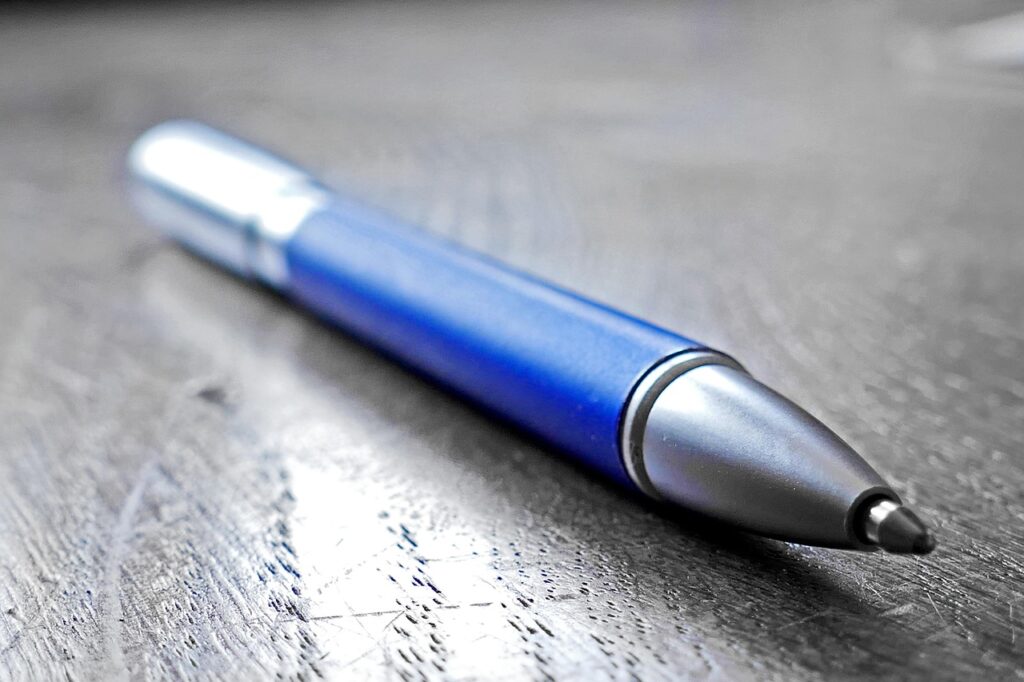
Why a blue ballpoint pen still belongs on the desk
A blue ballpoint pen is still one of the most useful writing tools in offices, schools, reception areas, warehouses, and home paperwork. It offers the clean handling of ballpoint ink in a color that is easy to spot on printed forms, photocopies, notebooks, and labels. Blue ink can help show that a mark or signature is original, but it is not accepted automatically for every official document. The practical rule is straightforward: use blue for everyday writing, internal forms, signatures where blue or dark blue is allowed, and notes that need to stand out. Use black when the form specifically says black ink only. For more writing instrument topics, visit the Pens section.
This guide focuses on how to choose and use a blue ballpoint pen rather than promoting one product. The main factors are ink behavior, tip size, document requirements, paper type, writing comfort, and storage. Public standards and form instructions provide useful guardrails. ISO 12757-2 covers ballpoint pens and refills for documentary use, while some government forms specify exact ink colors. Those details matter more than habit or personal preference when writing must be processed, scanned, filed, or archived.
How blue ballpoint ink works
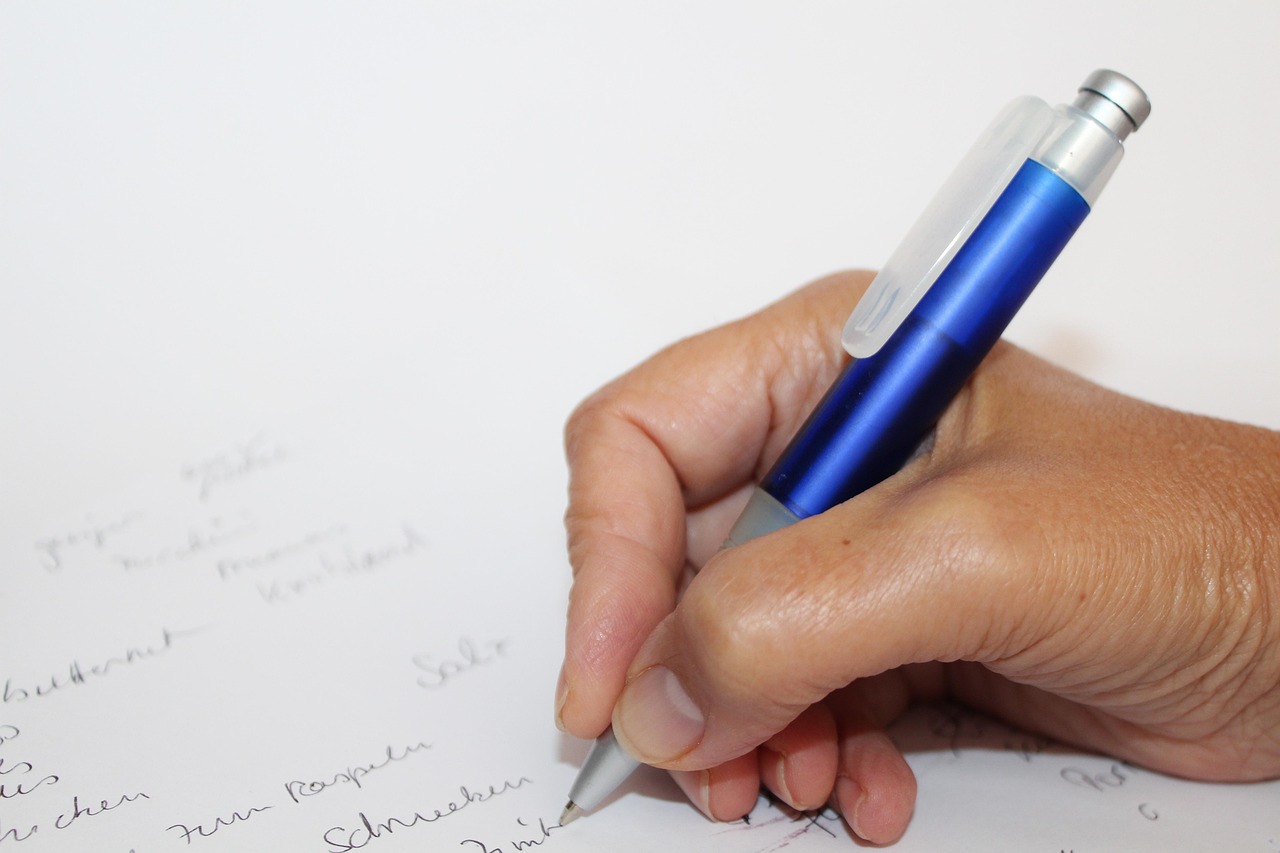
A ballpoint pen writes with a small ball held in a socket at the tip. As the ball rolls, it picks up ink from the cartridge and transfers it to the paper. Traditional ballpoint ink is more viscous than fountain pen ink and many rollerball inks, which helps reduce smearing, feathering, and leakage in everyday use. That is why ballpoints are common in workplaces where pens are shared, carried in pockets, stored in drawers, or used quickly on ordinary copy paper.
Blue ballpoint ink is usually oil-based or hybrid oil-based. Standard oil-based ink feels controlled and tends to dry quickly on absorbent paper. Low-viscosity or hybrid ballpoint inks are made to write more smoothly and produce a darker line while still using a ballpoint mechanism. The trade-off is that very smooth ink may lay down more color, which can slightly increase drying time on coated paper or labels. On most office and school paper, the difference is small, but left-handed writers and fast note-takers may notice it.
Color intensity also varies. Some blue pens produce a light royal blue line, while others write in navy, dark blue, or blue-black. For forms and signatures, darker blue is often easier to scan and read. For notebooks, brighter blue can make headings, corrections, or personal notes easier to find later. If the writing will be copied or digitized, test a small line first instead of assuming every blue ink performs the same way.
Where blue performs best and where black may be safer
Blue ink is popular because it separates handwriting from black printed text. On a form printed in black, blue entries are easy to identify. On a photocopy, blue may reproduce differently from the original, which can help distinguish an original page from a copy. However, some forms are handled by scanners, agencies, banks, or automated systems that prefer or require black ink. The instruction on the document should always override general stationery advice.
| Use case | Blue ballpoint pen advantage | Important caution |
|---|---|---|
| Office notes and meeting minutes | Easy to read and visually different from printed text | Use a darker blue if notes will be scanned |
| Internal forms | Shows handwritten entries clearly on black printed templates | Follow any company policy on ink color |
| Signatures | Can help identify an original wet signature | Some documents still require black ink |
| Schoolwork and study notes | Comfortable for long writing sessions and easy to review | Teachers or exam boards may set their own rules |
| Shipping labels and envelopes | Often readable on plain paper labels | Glossy labels may smear unless the ink is fully dry |
| Passport or agency forms | Useful only if the form allows blue or dark blue ink | For example, current U.S. passport Form DS-11 states black ink only |
USCIS public filing guidance has generally referred to black or blue ink for forms completed by pen, while the U.S. Department of State passport form DS-11 instructs applicants to use black ink only. The point is not that one color is always better. The document itself decides. If a form says black ink, do not use blue. If a form allows black or dark blue, a reliable blue ballpoint pen can be appropriate.
Tip size, line width, and paper choice
Tip size affects legibility, smoothness, and how much ink reaches the page. Fine tips are useful for small form boxes, calendars, planners, and detailed notes. Medium tips suit general office writing because they balance smoothness and control. Bold tips feel darker and smoother, but they can look crowded on small forms or thin paper.
Packaging terms such as fine, medium, and bold are helpful, but they are not perfectly consistent across brands. A pen labeled 0.7 mm may not create the same line as another 0.7 mm pen because ball size, ink viscosity, paper texture, and writing pressure all affect the mark. For practical selection, start with the job:
- Choose fine tips for compact forms, margins, accounting notes, planner boxes, and small handwriting.
- Choose medium tips for daily office notes, signatures, classroom work, and general correspondence.
- Choose bold tips for labels, quick marks, large handwriting, and notes that need stronger visibility.
Paper choice matters as well. On standard copy paper, most blue ballpoint pens perform well. On very thin paper, bold tips may show through more. On coated receipts, glossy labels, plastic folders, or laminated surfaces, ballpoint ink may skip or take longer to dry. For those surfaces, a permanent marker or a pen designed for special materials may be more reliable.
Document use and permanence
Not every blue ballpoint pen is suitable for important records. For everyday notes, a normal blue pen is usually enough. For contracts, logbooks, laboratory records, archived business files, or documents that must last, look for packaging that mentions permanent ink, archival qualities, or documentary use. The International Organization for Standardization lists ISO 12757-2 as the standard for ballpoint pens and refills intended for documentary use, and the standard was listed as current after review in 2026.
Documentary-use claims are useful because they point to specific performance expectations rather than vague marketing language. Still, buyers should not assume that every blue ballpoint refill meets a documentary standard. The color blue only identifies the ink color; it does not prove resistance to light, water, erasing, or solvents. If the record matters, check the refill marking, packaging, or manufacturer specification.
Storage also affects written records. Keep important paper documents away from direct sunlight, moisture, heat, and chemical exposure. Ballpoint ink is generally practical for filing, but paper quality and storage conditions can be just as important as the pen. For high-value legal, medical, or financial paperwork, follow the instructions from the receiving institution and treat stationery choice as one part of the document-handling process. See also: Gift Guide.
Comfort, barrel design, and everyday carry
A good blue ballpoint pen should be comfortable for the amount of writing you do. For quick signatures, almost any reliable pen may work. For long notes, training sessions, forms, or study, barrel shape and grip design become more important. A narrow plastic barrel is light and inexpensive, but it may cause hand fatigue during long writing sessions. A thicker barrel or soft grip can reduce pressure for some writers, especially when using firmer oil-based ink.
Capped and retractable designs each have advantages. Capped pens are simple and protect the tip well, but caps are easy to lose in busy environments. Retractable pens are convenient for meetings, counters, warehouses, and field work because the tip can be extended with one hand. They also work well when a pen moves between a pocket and a clipboard. The main caution is accidental clicking in a bag or pocket, which can leave ink marks if the point is exposed.
Clip strength, barrel visibility, and refill availability are practical details worth checking. A strong clip keeps the pen attached to notebooks or shirt pockets. A transparent barrel helps users see the remaining ink. Refillable bodies can reduce waste and support a preferred writing feel, but only if compatible refills are easy to find. For shared office use, simple disposable or low-cost refillable pens may be more realistic than premium bodies that disappear from desks.
A practical buying checklist
Choosing a blue ballpoint pen is easier when the decision is tied to the use case. A receptionist may need a dependable medium tip for forms and signatures. A student may prefer a smoother low-viscosity pen for long notes. A warehouse team may want bold, readable blue ink for checklists. A document-heavy office may need dark blue pens that remain legible after scanning.
- Ink shade: Choose dark blue for forms and scanning, and brighter blue for visual organization and study notes.
- Tip size: Use fine for compact writing, medium for general use, and bold for high visibility.
- Drying behavior: Test for smearing if the pen will be used by left-handed writers or on coated paper.
- Document suitability: Check whether the form allows blue, dark blue, black, or black only.
- Comfort: Match barrel width and grip to the expected writing time.
- Reliability: Look for consistent starts, limited skipping, and a line that remains readable after scanning.
- Storage: Keep pens capped or retracted, and avoid leaving them in high heat for long periods.
- Refills: If buying a reusable body, confirm that blue refills are available and clearly identified.
For a mixed workplace, the safest approach is to stock both blue and black ballpoint pens. Blue handles most notes, signatures, and internal paperwork well. Black covers forms that demand black ink and documents where scanning systems are stricter. Keeping both colors available prevents delays and avoids forcing one pen color into every situation.
Frequently asked questions
Is a blue ballpoint pen acceptable for signatures?
Often, yes, but not always. Blue ink is commonly used for signatures because it stands out from black printed text and can help indicate an original handwritten mark. However, the receiving organization or form instructions decide what is acceptable. If a document says black ink only, use black.
Is blue better than black for everyday writing?
Blue is not universally better, but it is highly practical. It is easy to read, visible on black printed forms, and useful for notes that need to stand apart from printed material. Black is often safer for formal submissions, scanning, and forms with strict instructions.
What tip size should I choose for forms?
A fine or medium blue ballpoint pen is usually best for forms. Fine tips fit small boxes and reduce crowding. Medium tips are smoother and easier for signatures. Bold tips can be too heavy for compact forms, but they are useful for labels and large handwriting.
Does blue ballpoint ink fade over time?
Some inks are more durable than others. Ordinary blue ballpoint ink is suitable for daily notes and many office records, but important documents should use pens or refills labeled for permanent, archival, or documentary use. Storage away from light, heat, and moisture also helps preserve writing.
Can I use a blue ballpoint pen on glossy labels or receipts?
You can try, but performance is less predictable than on plain paper. Glossy and coated surfaces may cause skipping or smearing because the ink cannot absorb quickly. For slick surfaces, test first or use a writing tool designed for that material.