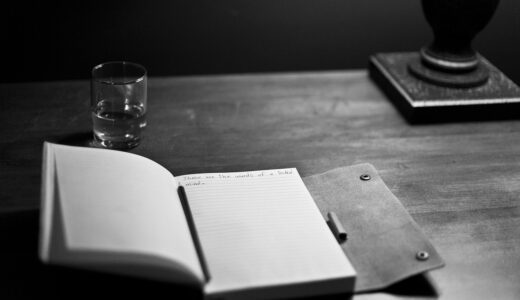
How to choose a journal for men that fits real routines

What makes a journal for men worth using?
A good journal for men is easy to open on a busy day and specific enough to earn its place in a routine. It might be used to manage stress, plan work, track fitness, record family memories, or sort through thoughts that are hard to say aloud. The best choice is rarely the notebook with the most pages or the strongest masculine branding. It is the notebook, guided journal, or hybrid system that makes writing feel low-friction, private, and repeatable.
This matters because journaling sits at the intersection of stationery, habit design, and mental clarity. The National Institute of Mental Health notes that men are less likely than women to have received mental health treatment in the past year, while CDC data for 2024 shows that the suicide rate among males was nearly four times the rate among females. A journal is not a substitute for professional care, but it can be a practical place to notice patterns, name pressure, and prepare for better conversations. (nimh.nih.gov)
Start with the job the journal needs to do
The phrase journal for men can point to very different search intents. Some readers are looking for a gift. Some want a private mental health tool. Others need a work notebook, a fitness log, or a structured daily planner that does not feel decorative. Before choosing a format, define the main job in one sentence: I want this journal to help me with…
| Primary use | Useful format | What to look for |
|---|---|---|
| Stress and reflection | Blank or lightly prompted journal | Undated pages, enough space for full paragraphs, discreet cover |
| Work planning | Dot grid or ruled notebook | Index pages, numbered pages, lay-flat binding, durable cover |
| Fitness tracking | Logbook or custom template | Tables for workouts, sleep, nutrition notes, injury tracking |
| Fatherhood or relationships | Prompted journal | Questions that encourage memory, gratitude, values, and communication |
| Everyday carry | Pocket notebook | Small size, sturdy cover, paper that handles quick pen use |
If the goal is unclear, choose flexibility. A dot grid or simple ruled journal lets the user test several layouts without being locked into a dated planner that becomes less useful after missed days. For more ideas across notebook formats and journaling approaches, explore the site’s journaling guides.
Why men-specific journaling should be practical, not performative
A journal does not need to announce masculinity to be useful for men. Overly performative design can make the product feel like a novelty gift instead of a daily tool. Better men-focused design usually means restraint: a cover that can sit on a desk without attracting attention, prompts that avoid clichés, enough structure to reduce decision fatigue, and enough blank space to let the writer be honest.
There is also a social dimension. The CDC explains that mental health stigma can prevent or delay people from seeking care or cause them to discontinue treatment. For some men, a private journal can lower the first barrier because it does not require public disclosure. It gives the writer a place to put words around anger, fatigue, fear, guilt, ambition, or uncertainty before deciding whether to share those words with a partner, friend, coach, doctor, or therapist. (cdc.gov)
The American Psychological Association’s guidelines for practice with boys and men emphasize that rigid gender expectations can affect health and quality of life. A journal can support a more flexible approach. It does not tell men to be less driven, less responsible, or less resilient; it gives them a place to examine whether a particular pattern is helping or costing them. (apa.org)
Choose physical features that reduce friction
Most journaling failures are not caused by a lack of insight. They happen because the journal is inconvenient, uncomfortable, too public, or too demanding. The right physical features make the habit easier before motivation is even involved.
Size and portability
A pocket notebook works well for short notes, field observations, meeting reminders, and quick mood checks. An A5-style notebook is often more comfortable for reflection because it gives the hand room to move. A larger desk journal can support long-form writing, but only if it will stay in one place. If the journal needs to move between a gym bag, office, car, and nightstand, choose compact and durable over impressive.
Paper and pen compatibility
Paper quality matters because poor paper makes writing feel cheap and messy. Men who use gel pens, fountain pens, or heavy markers should look for paper that resists feathering and bleed-through. For everyday ballpoint or pencil use, thinner paper may be acceptable, especially in a portable journal. The key is not luxury; it is whether the page makes writing smooth enough to repeat.
Binding and page layout
Lay-flat binding is useful for longer entries because it removes the need to hold the journal open. Dot grid pages are strong for mixed use because they support lists, charts, diagrams, and paragraphs. Ruled pages are better for linear writing. Blank pages are excellent for sketching, mind maps, and visual thinking, but they can feel intimidating to beginners.
Privacy and visual design
Privacy is both physical and psychological. A discreet cover, elastic closure, storage pocket, or lockable drawer may matter more than a printed prompt. For many men, a plain black, brown, gray, navy, or kraft cover feels easier to use in public. That does not mean color is wrong; it means the journal should match the user’s environment and comfort level.
Use evidence-informed methods without overclaiming
Journaling has research support, but the evidence is not a magic promise. Expressive writing studies often involve writing about stressful or emotional experiences for short sessions over several days. A 2023 meta-analysis in the British Journal of Clinical Psychology reviewed 31 randomized controlled studies with follow-up assessments and found a small but significant overall effect on depression, anxiety, and stress symptoms, with effects appearing more clearly after a delay. (pubmed.ncbi.nlm.nih.gov)
Other research is more cautious. Earlier reviews and trials have found mixed results depending on the population, topic, timing, and outcome measured. A 1998 synthesis by J. M. Smyth found improved health outcomes in healthy participants but also noted that writing could increase immediate distress. A separate review of expressive writing after stressful or traumatic experiences concluded that the evidence did not support recommending it broadly as a way to prevent negative health consequences. (pubmed.ncbi.nlm.nih.gov)
The practical takeaway is simple: use journaling as a tool for awareness, organization, and reflection, not as a guaranteed treatment. If writing about trauma, grief, or suicidal thoughts makes distress feel stronger or less controllable, pause the exercise and seek qualified help. In the United States, the 988 Suicide and Crisis Lifeline is available by calling or texting 988; life-threatening emergencies require 911.
Five useful journaling methods for men
- The three-line check-in: Write what happened, what you felt, and what you need next. This works when time is limited.
- The pressure log: Track stress triggers, body signals, and responses. Over two weeks, patterns often become easier to see.
- The decision page: Divide a page into facts, assumptions, risks, options, and next action. This is useful for work and money decisions.
- The training note: Record workout, sleep, energy, soreness, and one adjustment for next time. It connects fitness with recovery.
- The unsent letter: Write honestly to a person, role, past event, or future self without sending it. This can clarify what needs to be said later, if anything.
Positive affect journaling is another accessible option. In a 2018 randomized controlled trial published in JMIR Mental Health, medical patients with elevated anxiety symptoms who used an online positive affect journaling intervention showed lower anxiety after one month and lower mental distress at months one and two compared with usual care. The study was preliminary, had a modest sample, and did not show improvement across every well-being measure, so it is best viewed as promising rather than definitive. (mental.jmir.org) See also: Gift Guide.
Prompts that feel useful rather than forced
The right prompt gives a man a starting point without telling him what to feel. Avoid prompts that are too sentimental for the situation or too vague to answer. Good prompts are concrete, answerable, and connected to action.
Work and ambition prompts
- What problem took most of my attention today?
- What did I avoid because it felt unclear, boring, or risky?
- Which task would make tomorrow noticeably easier?
- What am I measuring that may not actually matter?
- Where did I confuse being busy with making progress?
Stress and emotional clarity prompts
- What emotion showed up most strongly today, and where did I feel it in my body?
- What story am I telling myself about this situation?
- What part of this is a fact, and what part is an assumption?
- What would I say to a close friend in the same position?
- What is one healthy action I can take in the next 24 hours?
Fitness and health prompts
- How did sleep affect my energy today?
- What did my body handle well this week?
- What warning sign should I not ignore?
- What small recovery habit would support tomorrow’s performance?
- What goal still matters after the initial motivation fades?
Relationships and fatherhood prompts
- Who needed more patience from me today?
- What did I not say that probably needs to be said?
- What family moment do I want to remember later?
- What value did I model through my actions, not my words?
- Where can I listen before trying to fix?
Common mistakes that make a journal fail
The first mistake is buying a journal that fits an imagined identity rather than an actual routine. A leather desk journal may look impressive but fail if the user writes mostly in transit. A pocket notebook may be convenient but frustrating for long reflection. Match the tool to the place and time where writing will happen.
The second mistake is trying to write every day at full length. Daily journaling can work, but missed days should not break the system. Undated pages are more forgiving than dated pages for beginners. A three-line entry is still useful if it captures a pattern or decision.
The third mistake is turning every entry into self-criticism. A journal should create clarity, not become a private courtroom. If every page becomes a list of failures, change the format. Add neutral observations, evidence, options, and next steps. The goal is not to win an argument against yourself; it is to understand what is happening.
The fourth mistake is ignoring privacy. If a man worries that someone will read the journal, he will either stop writing or write safely rather than honestly. Decide where the journal lives, who can access it, and whether sensitive entries should be coded, separated, or destroyed after processing.
A simple 14-day starter plan
This starter plan is designed for men who want the benefits of journaling without building an elaborate system. Use one notebook, one pen, and ten minutes or less.
- Days 1-2: Write three lines at night: what happened, what mattered, and what needs attention tomorrow.
- Days 3-4: Add a stress rating from 1 to 10 and one sentence about the main trigger.
- Days 5-6: Try a decision page for one unresolved issue at work, home, or health.
- Day 7: Review the week. Circle repeated words, names, places, or problems.
- Days 8-9: Use one relationship prompt and one fitness or recovery prompt.
- Days 10-11: Write for five minutes about a pressure you have not fully named. Stop if it feels overwhelming.
- Day 12: Make a two-column list: what I can control and what I cannot control.
- Day 13: Write one unsent letter, then decide whether any part of it should become a real conversation.
- Day 14: Review the experiment. Keep the pages that worked, drop the rest, and design a weekly rhythm.
After two weeks, the best system is usually obvious. If short entries were easy, keep a pocket or bedside journal. If decision pages were the most useful, move toward dot grid or work-focused layouts. If emotional prompts helped but felt intense, keep sessions short and consider sharing patterns with a trusted professional.
Frequently asked questions
What is the best type of journal for men who are beginners?
For most beginners, an undated ruled or dot grid notebook is the safest choice. It allows short entries, lists, planning pages, and reflection without forcing a daily schedule. A guided journal can also work if the prompts match the user’s real goals rather than generic motivation.
Should a men’s journal be guided or blank?
Choose guided if the writer freezes in front of an empty page. Choose blank or lightly structured if he already has topics to track. Many men do well with a hybrid approach: a blank notebook plus a short list of prompts copied onto the first page.
How often should men journal?
Consistency matters more than frequency. Three useful entries per week are better than daily pages written out of obligation. For stressful topics, shorter sessions can be safer and more sustainable than long emotional downloads.
Can journaling replace therapy or medical care?
No. Journaling can support reflection, planning, and communication, but it should not replace professional help for depression, anxiety, trauma, substance misuse, suicidal thoughts, or any symptoms that interfere with daily life. It can, however, help a man prepare clearer notes for a doctor, counselor, coach, or trusted support person.
What should I write in a journal gift for a man?
If giving a journal as a gift, write a simple note on a card rather than inside the first page unless you know he would appreciate it. A useful message is direct: I thought this might be a good place for ideas, plans, and things worth remembering. Pairing the journal with a reliable pen often makes the gift more complete.