What Are the Best Notebooks for Students Who Take Lots of Notes?
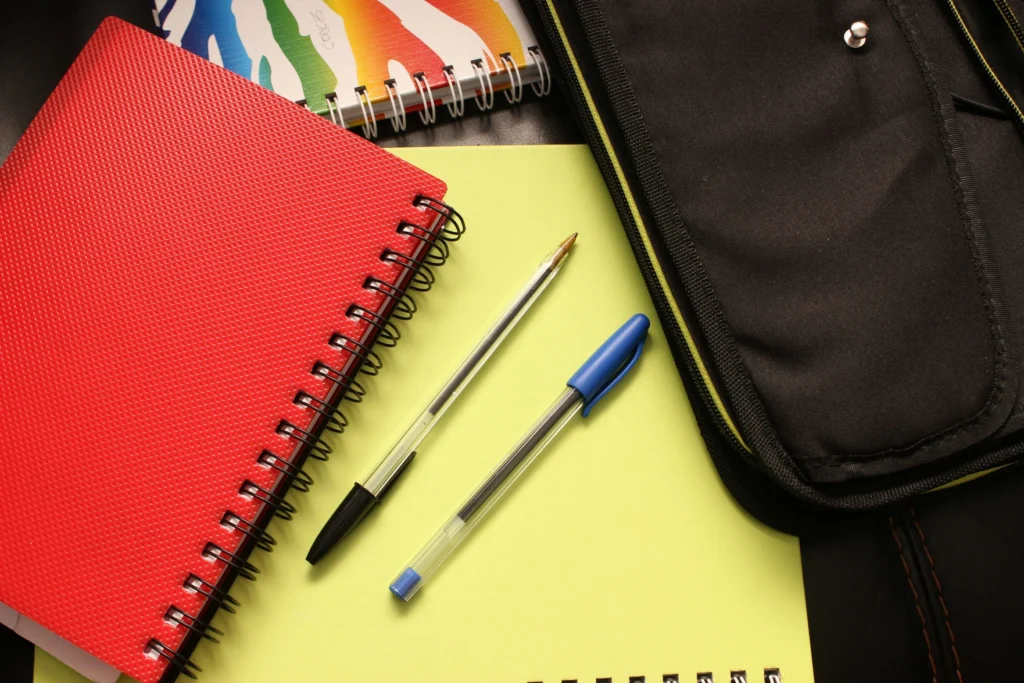
Choosing the right notebook to take notes can make a big difference. For heavy note-takers, lectures, lab sessions and study groups, the best notebooks are durable, feature smooth paper, intelligent layout and are portable. We looked at reviews and compared a range of notebooks and have found that spiral-bound notebooks with thick paper (90gsm and above), tough covers and clear ruled lines are the most suitable for heavy note-taking. Students have given top marks to Moleskine, Leuchtturm1917 and Five Star notebooks for their usability and durability.
Why Does Notebook Quality Matter for Students Who Take Extensive Notes?
Note-taking is not merely a matter of collecting information and storing it away for later use. Instead, it is a way to create a personal knowledge system that can be reviewed again and again, and that allows information to be added to and synthesized in new ways. Because note-taking takes place in a physical notebook, the quality of that notebook is an important factor. In addition to how it feels to use when writing, the notebook must also be of sufficient quality so that the notes it contains can be reviewed later without problems. Papers that are of too low a quality cause ink to bleed through to the other side, or to tear. Bindings that are not of sturdy enough quality also tend to fail under heavy use.
Paper Weight and Texture
Paper weight or thickness is also important to consider because you want the paper to hold the ink from your pens and markers well without any ghosting or bleeding. Typically, experts suggest a paper with at least 80gsm for normal writing with pens and markers and 90gsm and above for people who use fountain pens. Note-takers who are always on the go require paper with smooth surface to reduce friction between their pens and paper.
Binding Durability
A good binding can last a whole semester and keep your book of notes in shape. Spiral bound books are flexible, and you can open them up as wide as you like, or fold them back and work from anywhere. Stiched books are more traditional in their appearance, but they are also strong and durable for longer. Twin-wire stitched books are especially ideal for people who are constantly opening up their books as they work through their notes because they do not bend.
Cover Material and Protection
Covers protect your notes from spills and wear. The lightweight, moisture-resistant Poly cover is perfect for taking notes on the go. The hardcover of a notebook gives it the structural integrity it needs to stay upright when writing in it on your lap. Many high-quality notebooks also have rounded corners to prevent the notebook from wearing and fraying.
How Do Layouts Influence Note-Taking Efficiency?
A design for a page layout takes form in how content can be best and most appropriately organized on a given surface of an enormous size and the ways in which notes will be put to optimal use by a given student depending off previous said methods, such as mind maps, outlines or Cornell-style notes in which students with certain habits would most likely be aided by organization within the pages given to them.
Ruled vs Grid vs Dot Layouts
Ruled pages are great for traditional note taking that is best organized from start to finish. Grid paper can be very useful for creating diagrams or equations. Dotted pages have enough structure to keep you organized while allowing enough freedom for the sketch artist who mixes drawing and notes and also for the very visual person.
Cornell Note System Pages
By creating the Cornell-style page, the sheet is split into the cue column, notes section, and summary. Using these separate components allows for active recall. The student is forced to reword the information from the day’s lectures before writing them down, thus not copying down the lecture slides word for word.
Perforated Pages for Organization
Perforated edges allow notebook pages to be pulled out of the notebook without having the binding threads tear. Often students will use detachable sheets for group work, or for items such as scanned receipts that they want to include in their submissions but don’t want to tear the notebook. In these instances the detachable sheets can be submitted while the rest of the notebook is left intact.
What Are the Most Recommended Notebook Brands Among Students?
A brand’s reputation in stationery often reflects the quality of its products’ consistent manufacturing, rather than clever marketing and advertisement. And, when it comes to stationery meant for use by the academic community, a number of brands earn the community’s respect through the high-quality paper used in their products as well as other thoughtful design elements.
Moleskine Classic Series
Moleskine notebooks have acid-free paper that will not yellow with age, which makes them a great choice for filing away your notes and research papers as well as storing your thesis draft. The elastic closure keeps the notebook securely shut. A small detail perhaps, but important to students like yourself who are constantly on the go.
Leuchtturm1917 Academic Editions
Leuchtturm1917 notebooks feature numbered pages and an index section that can be organized throughout the semester. The ink-proof paper is great for users who write with gel pens and are meticulous note-takers in fields like law and medicine who hate when ink smears and makes a big mess.
Five Star College-Ruled Notebooks
The Five Star remains a very popular choice with the high school and undergraduate student. Affordable, yet incredibly durable the bags feature reinforced covers and water-resistant coatings to ensure they can withstand the wear and tear of daily backpack use. Most other bags in this price bracket wouldn’t last long enough to get a second wash, but these are built to last.
How Can Digital Integration Enhance Traditional Note-Taking?
Most of the current offerings of digital support in classrooms are ‘hybrid’. They support ‘old’ writing on physical objects. They also enable these to be fully search-able and digitally storable.
Smart Notebooks with Cloud Sync
Smart notebooks like Rocketbook allow handwritten notes to be scanned via app into cloud platforms such as Google Drive or OneNote. Reusable pages reduce waste while maintaining handwriting comfort preferred by many learners.
Optical Character Recognition (OCR) Tools
OCR technology can turn handwritten notes to editable text. For the research student, this means a searchable archive of notes from lectures over many subjects.
Tablet-Compatible Paper Systems
There are now Hybrid Notebooks by some brands that can be used with styluses and even mimic the real paper feel & texture on tablets and also allow for precise handwriting and all without the physical storage limitations of a traditional physical notebook.
Which Notebook Features Support Long-Term Academic Success?
While making a notebook more usable in the short term is important, other features of a notebook can contribute to long term academic success by encouraging consistent study habits and reducing study friction.
Section Dividers for Multi-Subject Use
The dividers are really useful for keeping all the different topics for a subject inside the one book instead of spreading it all over the place. It really helps when you have more than one subject and you don’t want to carry around more than one book every day.
Archival-Quality Paper
Using acid-free archival quality paper for your notes allows them to last for years. Useful for postgraduate students referencing from earlier in your studies when compiling your thesis.
Sustainable Materials
Environmentally friendly notebooks consisting of recycled fibers are ideal for institutions that promote eco-friendly campus initiatives and seek a quality professional notebook.
How Should Students Choose Based on Writing Instruments?
The compatibility between pen and paper determines the degree to which legibility and writing comfort are increased in writing with ballpoint pens over longer periods of time on notebook paper.
Fountain Pen Compatibility
Many papers are not created equal when it comes to handling wet ink, smooth high-gsm sheets of paper do the best job of avoiding feathering when using a fountain pen to write out essays in the various humanities disciplines where much essay writing is initially done by hand.
Gel Pen Users’ Considerations
Gel pens have thick lines that look beautiful but dry slowly and might smudge. Using a semi-coated paper will reduce the risk of the ink smearing whilst the writer is frantically flipping back and forth between notes in a fast-paced lecture.
Pencil-Friendly Surfaces
Graphite adheres best to slightly textured paper used in the engineering field books. Most field books are used for sketching and computation. The sketches and computation require frequent erasing. This work cannot be done on smooth fiber paper, as the fiber can be easily torn.
FAQ
Q1: What size of notebook is best for college students? A: For college students A5 is a good size as it is portable enough but has enough space on the page. However for detailed subjects like physics, A4 is better as you have enough room for diagrams or for writing out formulas.
Q2. Are spiral notebooks better than bound ones? A. Although they offer flexibility spiral bindings can snag in inside pockets of bags. Bound notebooks on the other hand are durable for very heavy use if treated right.
Q3: How many pages should an ideal student notebook have? A: Typically between 100–200 pages of note space per subject for a single semester, depending on how many lectures and how much note taking required.
Q4: Reusable smart notebooks fully to replace traditional notebooks? A: Smart notebooks are very useful for the tech savvy user. But they can’t fully replace traditional notebooks regarding the storage of tactile memory of handwriting. Studies have proven learning depth of reusable smart notebooks for students.
Q5 What study paper color most reduces eye fatigue when studying long? A: Soft cream or ivory paper colors like these do not reflect as much as white paper, so they reduce glare in study environments lit by very fluorescent tubing, in contrast to white paper.