How to choose a green notebook for writing, school, and work

What a green notebook should mean before you buy
A green notebook can mean two different things: a notebook with a green cover, or a notebook positioned as a more environmentally responsible stationery choice. The right option is the one that fits your writing habits first and supports any sustainability claim with clear, specific information. For everyday writing, school notes, office planning, or journaling, look past the cover color and check paper weight, opacity, binding, page format, and how the product explains recycled content or certified sourcing. A durable notebook that you actually finish is often a better choice than one bought only because it carries a vague green label.
That distinction matters because notebooks are simple products, but they involve design choices, paper sourcing, disposal options, and daily use behavior. A green cover may help organize subjects or match a brand palette. Recycled paper or certified fiber may reduce reliance on virgin material. Refillable formats may reduce cover waste over time. No single feature tells the whole story, so a good purchase depends on comparing function and environmental claims together.
Start with the use case, not the label
Before comparing materials, decide how the notebook will be used. A student carrying one notebook between classes needs different features from a desk-based planner, a sketchbook user, or someone writing with fountain pens. If the notebook fails in daily use, its environmental positioning becomes less meaningful because unfinished or quickly replaced stationery creates avoidable waste.
- For school notes: choose a lightweight but sturdy format, such as composition, spiral, or softcover thread-bound notebooks. Subject dividers or color-coded covers can make a green notebook part of a larger organization system.
- For work meetings: look for lay-flat binding, restrained ruling, and paper that works with gel pens or rollerball pens without obvious show-through.
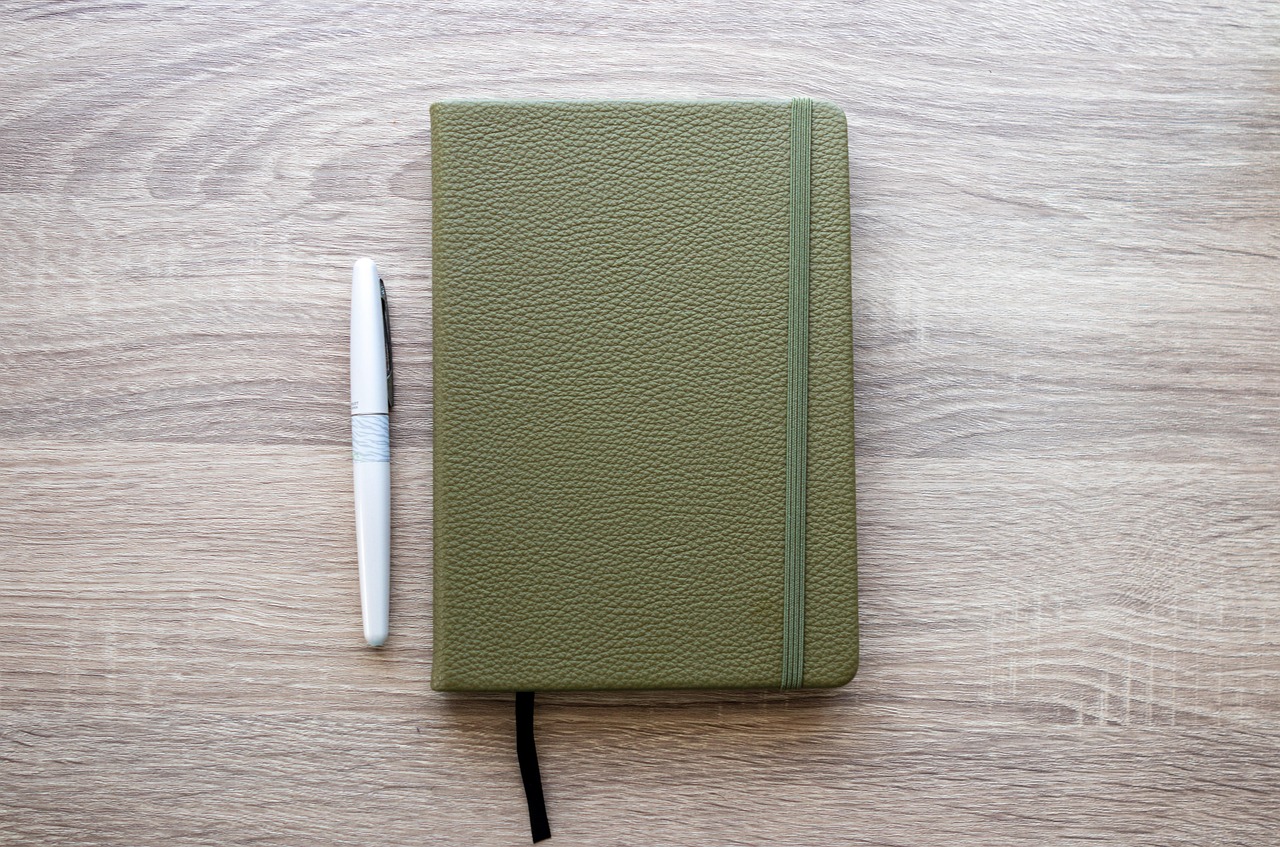
- For journaling: prioritize comfort, page feel, durability, and a cover that encourages repeated use. A green hardcover can feel calm and consistent on a desk or bedside table.
- For travel: smaller sizes and rounded corners matter more than high page counts. A notebook that fits a bag or jacket pocket is more likely to be used fully.
If you are comparing different notebook styles, browse the Notebook section for related formats and writing-use ideas.
Paper choices that affect writing quality and waste
Paper is the main material in most notebooks, so it deserves more attention than slogans on the wrapper. The U.S. Environmental Protection Agency reports that paper and paperboard accounted for 67.4 million tons of municipal solid waste generation in 2018, or 23.1 percent of total U.S. municipal solid waste that year. The same EPA material-specific data page, last updated on October 23, 2025, reports that about 46 million tons of paper and paperboard were recycled in 2018, a 68.2 percent recycling rate. Those figures do not describe one notebook, but they show why paper sourcing and disposal are relevant when buying stationery.
Recycled content
Recycled paper can be a useful feature in a green notebook, especially when the label clearly states the percentage of recycled content and whether it is post-consumer or pre-consumer material. In U.S. environmental marketing guidance, the Federal Trade Commission says recycled-content claims should refer to materials recovered or diverted from the waste stream, and partial claims should be qualified with the amount of recycled material. In practical terms, “made with recycled paper” is less informative than “made with 80% recycled paper” or “100% post-consumer recycled paper.”
Recycled paper is not automatically the right choice for every writing tool. Some recycled papers feel toothier, vary in brightness, or show more ink feathering, depending on manufacturing quality. If you use fountain pens, markers, or heavy gel ink, paper performance should be checked alongside the environmental claim. A notebook that smears or bleeds may be abandoned early, which defeats the purpose of choosing carefully.
Certified fiber
Not all greener notebooks are made from recycled paper. Some use virgin fiber from certified sources. The Forest Stewardship Council describes FSC-certified paper and packaging as a way for businesses to demonstrate responsible forest sourcing. That does not mean every FSC-labeled notebook is recycled; it means the paper supply chain is being represented through a forest certification system. For buyers, the key is to understand what the mark is claiming: recycled content, responsible sourcing, controlled sources, or some combination.
Brightness, opacity, and ink behavior
Paper brightness and smoothness affect both readability and writing comfort. Very bright white paper can create strong contrast, while cream or off-white paper may reduce glare during long writing sessions. Opacity matters if you write on both sides of the page. A notebook with moderate recycled content but excellent opacity may be more usable than a thinner notebook with a stronger environmental claim but poor page performance.
Binding, cover, and page layout can reduce replacement waste
A green notebook should also be judged by how long it lasts and how efficiently its pages are used. Binding and cover construction influence whether a notebook survives a semester, a project cycle, or a year of planning. Page layout affects whether the user fills pages completely or skips sections because the format is inconvenient.
| Feature | What to check | Why it matters |
|---|---|---|
| Binding | Spiral, sewn, glued, discbound, or refillable | Lay-flat writing and durability can determine whether the notebook is used to the last page. |
| Cover | Paperboard, cloth, synthetic, flexible, or hard cover | A stronger cover may extend use, but mixed materials can complicate disposal. |
| Paper weight | Usually shown in gsm where listed | Heavier paper often improves opacity, but it can add bulk and material use. |
| Ruling | Lined, dot grid, grid, blank, or planner pages | A layout matched to the task reduces skipped or wasted pages. |
| Size | Pocket, A6, A5, B5, letter, or composition size | A practical size improves carry comfort and daily use. |
Refillable notebooks deserve special attention. If the cover is durable and refills are easy to find, a refillable format can reduce the need to replace the whole notebook. The limitation is availability: if refills are proprietary, expensive, or hard to source, users may stop refilling. For a simple classroom or office notebook, a recyclable paperboard cover and standard page format may be more realistic.
How to read green claims on notebook packaging
Environmental language on stationery packaging can range from useful to vague. Words such as “eco,” “green,” “natural,” or “earth friendly” are not specific enough by themselves. ISO 14021:2026 covers self-declared environmental claims and defines greenwashing as an environmental statement that is unsubstantiated, misleading, or irrelevant. For notebook buyers, the strongest claims are specific, measurable, and connected to the product or package.
Use this hierarchy when reading a notebook label: See also: Gift Guide.
- Specific material claim: “100% recycled paper” or “cover made with recycled paperboard” is clearer than “eco notebook.”
- Percentage claim: a percentage helps compare products and prevents assumptions about the whole notebook.
- Scope: check whether the claim applies to the pages, cover, packaging, or the entire product.
- Certification or standard: a recognized certification can add confidence, but the label should still be read carefully.
- Disposal claim: recyclable claims depend on local recycling access and on whether non-paper parts, coatings, wires, or elastics must be removed.
The FTC’s Green Guides summary says marketers should qualify recyclable claims when recycling facilities are not available to at least 60 percent of consumers or communities where the item is sold. For notebooks, this matters because paper pages may be recyclable, while spiral wire, plastic covers, elastic bands, laminated surfaces, or glued components may need different handling.
Color still matters for organization and design
Even when sustainability is part of the decision, the color green has practical value. A green notebook is easy to assign to a subject, department, habit, or project. In school, green often works well for science, language study, or personal planning because it stands out without being harsh. In office settings, a muted green cover can feel professional while still being easy to find in a stack of black, blue, and gray notebooks.
Cover shade also affects how the notebook is perceived. Forest green feels formal and durable. Sage green suggests calm, soft design. Bright lime or grass green is more visible and playful. Olive green pairs well with kraft paper, recycled-board textures, and outdoor or field-note styling. These design choices do not prove environmental performance, but they influence whether the notebook feels appropriate for its setting and gets used consistently.
A practical checklist before choosing a green notebook
Use this checklist to make a balanced decision instead of relying on a single label:
- Does the notebook’s size match where it will be used: desk, backpack, meeting room, or travel bag?
- Does the paper work with the pens you use most often?
- Is the green feature about color, recycled content, certified sourcing, refillability, packaging, or all of these?
- If recycled content is claimed, is the percentage clearly stated?
- If certification is shown, does it apply to the paper, packaging, or full product?
- Will the binding help you write comfortably across the whole page?
- Are there mixed materials that may make recycling harder?
- Will you realistically fill the notebook before buying another one?
The practical conclusion is straightforward: choose a green notebook that you enjoy using, fits the task, and explains its material claims clearly. A well-used notebook with transparent sourcing information is more valuable than a product that looks sustainable but leaves basic questions unanswered.
Frequently asked questions
Is a green notebook always made from recycled paper?
No. The phrase can describe the cover color, an environmental claim, or both. A notebook may have a green cover with conventional paper, recycled paper with a different cover color, or certified paper without recycled content. Always check the label rather than assuming.
What is the most important feature in a green notebook?
For daily users, paper quality and usability come first. If the notebook is uncomfortable to write in, it may not be finished. After that, compare recycled content, certified fiber, refillability, packaging, and disposal details.
Are spiral notebooks recyclable?
The paper pages are often recyclable where paper recycling is accepted, but the spiral wire or plastic coil may need to be removed. Local recycling programs vary, so recyclable claims are more reliable when they explain material limits clearly.
Is FSC-certified paper the same as recycled paper?
No. FSC certification relates to forest sourcing and chain-of-custody claims, while recycled content refers to recovered material used in the product. Some paper can carry both types of claims, but one does not automatically mean the other.
What color green is best for a notebook?
There is no single best shade. Dark green suits professional notes, sage green works well for calm journaling, olive green pairs with natural stationery styles, and bright green is useful when visibility or subject coding matters.