
Can Morning Journaling Make Your Day More Focused and Calm?
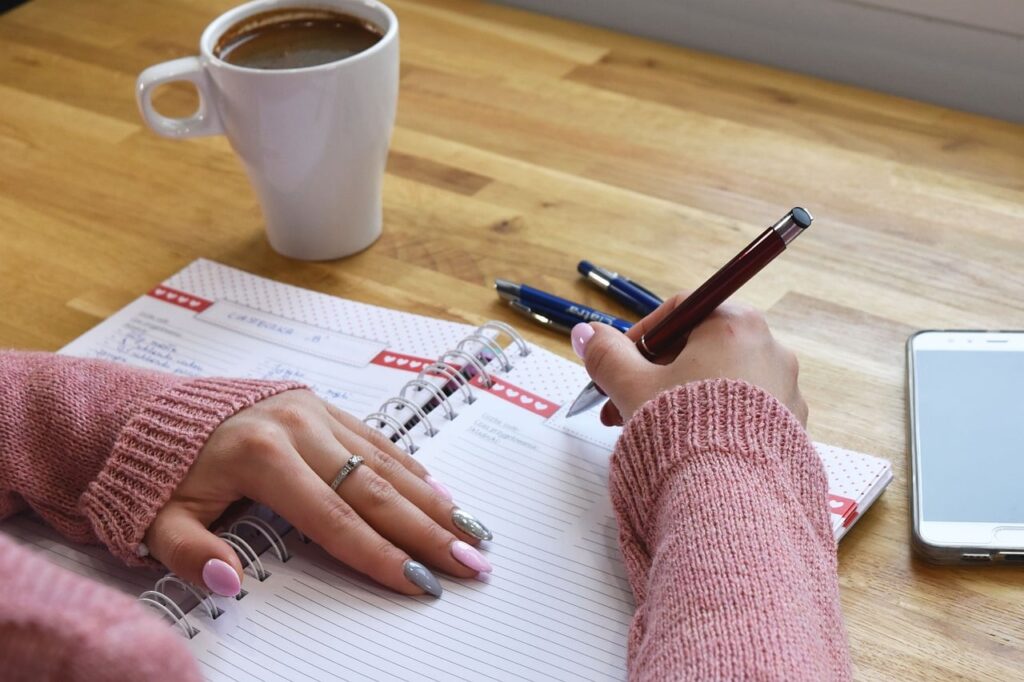
Why Should Morning Journaling Belong in Your Daily Routine?
Morning journaling gives the day a bit of space before messages, meetings, errands, and small home issues start asking for attention. If you want more ideas for notebooks, prompts, and daily writing habits, the Journaling section is a useful place to keep exploring. The goal is not perfect writing. The goal is to get your thoughts onto paper, so your mind does not have to hold every small thing at the same time.
A Quiet Start Before Other People Need You
The first ten minutes after waking can set the tone quickly. A spilled coffee, a late school bus, or one sharp email can change the mood before the day has even started. A journal gives you one small place that is yours before the schedule fills up. Even two lines can help: what feels heavy, and what needs attention first.

Clearer Thoughts on Paper
Paper slows the pace in a useful way. That is part of why it works. When you write by hand, your thoughts cannot run as fast as they do in your head, so they often land in a more workable order. The page does not need to look neat. Cross-outs, arrows, and half-written lines are normal parts of real journaling.
A Low-Cost Ritual That Fits Real Mornings
You do not need a luxury notebook, a candle, or a silent room. A basic lined notebook and a smooth pen are enough for most people. Keep them near the kettle, on your desk, or beside the bag you take to work. The habit should be easy to reach. If the setup takes longer than the writing, it is probably too much.
What Does Research Say About Writing Things Down?
Research on journaling is not magic, and it should not be treated as therapy by another name. Still, a few well-known studies show that structured writing can help people deal with emotion, notice good details, and repeat a behavior when the cue stays steady. That gives morning journaling a practical base beyond the clean notebook photos often seen online.
Expressive Writing Has a Tested Protocol
Psychologist James W. Pennebaker described early expressive writing studies where participants wrote about emotional experiences in short sessions. In his 2018 review in Perspectives on Psychological Science, he noted that an early student study used four days of 15-minute writing and later found fewer student health center visits among the expressive-writing group. He also described early limits and mixed replications, which matters. The plain reading is this: honest writing may help some people sort difficult thoughts, but it is not a cure-all. (journals.sagepub.com)
Therapeutic Journaling Uses Short, Private Sessions
The U.S. Department of Veterans Affairs Whole Health Library describes therapeutic journaling as a private writing practice often done for three or four sessions of about 20 minutes. The writing usually focuses on difficult events, feelings, and personal meaning. For a normal morning routine, you can use the privacy and honesty without pushing yourself into heavy subjects every day. Some mornings need more depth, and some mornings only need this kind of note: buy milk, call the dentist, stop checking the same notification. (va.gov)
Gratitude Lists Can Shift Daily Attention
Gratitude journaling also has some research behind it. In a 2003 Journal of Personality and Social Psychology study, Robert Emmons and Michael McCullough assigned participants to record gratitude, hassles, or neutral events, then tracked mood and related measures over time. This does not mean every page must sound happy. It means a short list of good things can point your attention toward details you might miss, like warm socks, a working pen, or a quiet bus ride. (pubmed.ncbi.nlm.nih.gov)
How Do You Build a Morning Journaling Setup That Feels Easy?
The best setup is the one you will actually use when you are still half asleep. In stationery terms, morning journaling works best when there is little friction: the notebook opens flat, the pen starts right away, and the page layout does not make you feel behind before you begin.
The Right Notebook Size
An A5 notebook is a practical middle size for many people. It gives enough space for a dated entry, a short list, and a few loose thoughts, while still fitting in a drawer or work bag. Pocket notebooks are useful for commuters, but they can feel tight for a full brain dump. Large notebooks look good on a desk, though they can make a five-minute entry feel more serious than it needs to be.
Pens That Do Not Fight Your Hand
A morning pen should start cleanly, move without much pressure, and dry fast enough so your hand does not smear ink across the page. Gel pens feel smooth, ballpoint pens travel well, and fine liners keep headings tidy. The right choice depends on your hand, paper, and writing speed. If you are left-handed, quick-dry ink matters more than whatever pen is popular that month.
A Desk Spot You Can Reach Half Awake
Put your journal where the habit can happen without looking around the room. A tray with one notebook and one pen usually works better than a drawer full of supplies. Keep the page marker on today’s page, and leave yesterday’s entry open if privacy allows. Small cues help because morning energy is not always strong.
Which Prompts Work Best When You Have Only Ten Minutes?
Good prompts do not ask you to perform. They give you an easy place to begin. If a prompt feels like homework, leave it. Morning journaling should help you step into the day with less noise, not add one more task to manage.
The Three-Line Check-In
This is the easiest format for busy weekdays. Write three short lines: how you feel, what matters today, and what can wait. The last line is more useful than it looks. Many mornings feel stressful because every task acts urgent, and a journal lets you move a few things back without guilt.
- Today feels like: calm, rushed, foggy, hopeful, tense.
- The one thing that matters most: finish the report, pack the order, take a walk.
- Something that can wait: reorganizing the drawer, replying to a low-priority thread.
The One-Page Brain Dump
For crowded mornings, set a timer for seven minutes and write whatever keeps repeating in your head. Do not edit it, and do not try to make the page look nice. Grocery lists can sit next to bigger worries; that is normal. When the timer ends, circle two items that need action and underline one thought worth keeping.
The Simple Priority List
If you like structure, use a short priority list. Keep it small: three tasks, one person to contact, and one thing to do for your body. A ten-item list often turns into a guilt list by lunch. A three-item list has a better chance of lasting through a real day. See also: Gift Guide.
Is Paper Better Than a Phone for Morning Journaling?
Paper is not always better for everyone, and reliable public data does not prove that paper beats digital tools for morning journaling in every case. The better question is more direct: which tool helps you write without getting pulled away? For many people, a notebook wins because it has no badges, alerts, or search bar waiting to distract you.
Fewer Alerts at the Wrong Time
Pew Research Center reported from its 2025 survey work that smartphone ownership is nearly universal among U.S. adults. That means the same device used for journaling often also holds work messages, social apps, and news. This is convenient, but it can split your attention before breakfast. A paper notebook is plain in a good way; it just waits. (pewresearch.org)
More Room for Slow Thinking
On paper, you can draw a box around a worry, add a star beside a priority, or sketch a small floor plan for moving a desk. These marks are not decoration. They help you think with your hands. Digital notes can also work well, especially for search and backup, but paper often feels calmer when the goal is a clean start.
A Record You Can Flip Through
A notebook builds a visible record over time. After two weeks, you can flip back and see repeated themes: poor sleep on late-scroll nights, better focus after breakfast, or the same task appearing five times because it needs a real decision. Patterns feel different when you can see them across pages. They are harder to ignore, and sometimes easier to fix.
How Can You Keep the Habit Without Making It a Chore?
The fastest way to ruin morning journaling is to turn it into a test of discipline. You do not need a perfect streak. You need a cue you can repeat, a small page, and a fair rule for missed days. A habit that works during ordinary weeks is worth more than one that only works during a quiet holiday.
Start With Two Minutes
Two minutes can sound too small, but that is why it works. Open the notebook, write the date, and add one sentence. If more words come, keep going; if they do not, stop there. The win is showing up at the page, because long entries can come later while tiny entries keep the habit alive on busy mornings.
Let Missed Days Stay Small
Habit research from University College London found that the average time to reach a steady level of automaticity was 66 days, with wide variation. The same research also found that missing one opportunity did not significantly hurt habit formation. That is useful news if you forget Saturday or travel without the right pen. Restart on the next page, with no long apology needed. (ucl.ac.uk)
Review One Page Each Week
Once a week, read a page or two and mark anything useful. You might notice a repeated worry, a task that keeps moving forward, or a small good moment you would have forgotten. This review makes the journal more than a morning dump. It becomes a practical record of what your days keep asking from you.
FAQ
Q1: How Long Should Morning Journaling Take? A: Five to ten minutes is enough for most days. If you are writing about a difficult event, a longer private session may help, but daily morning journaling should stay easy to repeat.
Q2: What Should You Write First in the Morning? A: Start with the date, one feeling word, and the main thing that needs your attention. If your mind feels crowded, use a short brain dump before making any list.
Q3: Do You Need a Special Journal? A: No. Choose a notebook that opens flat, feels good to write in, and fits your space. The best journal is the one you actually use before the day gets loud.
Q4: Can Morning Journaling Replace Therapy? A: No. Journaling can support reflection and planning, but it should not replace care from a qualified mental health professional when you need support.
Q5: Is It Better to Journal Every Day? A: Daily writing can build a strong rhythm, but missed days are normal. Keep the habit light, restart without drama, and let the notebook serve your morning rather than rule it.