Eco tank ink explained for cartridge-free home and office printing
What eco tank means when you are buying ink
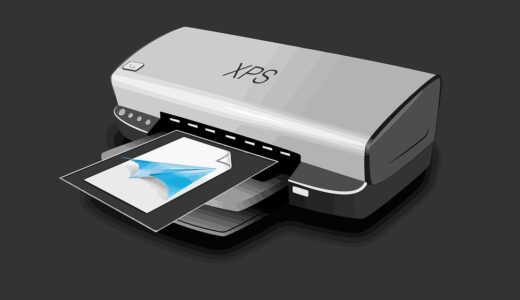
An eco tank printer is a refillable inkjet printer that stores ink in built-in tanks rather than small disposable cartridges. In everyday buying language, many shoppers mean Epson EcoTank, although the wider category is often called a supertank or ink tank printer.
The appeal is straightforward: larger ink bottles, fewer refills, and usually a lower cost per printed page. The trade-off is also clear. The printer often costs more upfront, the bottle series must match the model, and the printhead still needs regular use and basic maintenance. For households, classrooms, small offices, and hobby users that print steadily, the tank format can work well. For very occasional printing, a cartridge inkjet or laser printer may still be easier to own.
For more background on printer supplies and ink choices, see our inks guide archive.
How the refillable tank system changes ink buying
The main difference is not just the container shape. A cartridge printer uses small replaceable cartridges with limited ink volume. A tank printer separates the ink supply from the printhead system and lets the user pour or dock ink from a bottle into a visible reservoir. Epson’s EcoTank product pages describe the line as cartridge-free printing with high-capacity tanks and keyed EcoFit bottles on many current models.
That design changes the buying cycle in three practical ways:
- Fewer ink purchases: A replacement bottle set is designed to print thousands of pages under manufacturer test conditions, so users who print regularly may go much longer between refills.
- Lower packaging volume: Replacing many small cartridges with several larger bottles reduces cartridge waste, although bottles, caps, packaging, shipping, and the printer itself still have environmental impacts.
- More model-specific matching: Tank ink is not universal. The bottle number, ink chemistry, and printer compatibility should be checked before purchase.
Eco tank systems are most attractive when ink use is predictable: school worksheets, office drafts, shipping labels, club newsletters, forms, and everyday color documents. They are less compelling if the printer sits unused for months, because inkjet printheads can dry out or clog without regular use and maintenance.
What page yield numbers really mean
Published tank printer yields are useful, but they are not a promise that every user will get the same number of pages. Epson’s ink-yield information says its ink bottle yields are based on ISO/IEC 24712 test patterns with Epson’s methodology for continuous ink supply systems. The company explains that this method differs from ordinary cartridge testing because initial ink cannot be extracted from the tank in the same way. ISO/IEC 24711 is commonly used for inkjet cartridge yield measurement, while ISO/IEC 24712 provides the color test page patterns used in yield testing.
That distinction matters because real printing rarely matches a lab test. A page with a few lines of black text uses far less ink than a full-page flyer, dense photo, or color presentation. Cleaning cycles, startup charging, paper type, print quality mode, temperature, humidity, and usage frequency can all affect the actual number of pages printed.
| Published figure | What it helps you compare | What it does not guarantee |
|---|---|---|
| Black page yield | Text-heavy document printing under stated test conditions | Exact output for photos, labels, envelopes, or high-coverage pages |
| Color page yield | Relative capacity of cyan, magenta, and yellow bottles | Equal use of all colors in personal projects |
| Cost-per-page claim | A comparison based on manufacturer assumptions and listed supplies | Your total cost if printer price, paper, maintenance, and downtime differ |
| “Up to two years of ink” claim | A usage estimate for a defined print volume | Two calendar years for every household or office |
A practical way to read yield claims is to treat them as comparison tools, not personal forecasts. If you print 50 pages a month, a high-yield bottle set may last a long time. If you print color-heavy worksheets or photos every week, you may refill sooner than the headline number suggests.
Choosing the right eco tank ink bottle
The safest rule is simple: match the ink bottle series to the exact printer model. EcoTank printers use different bottle families, and those families may differ in bottle shape, chip or keying design, volume, and ink formulation. Many home models use four-color bottle sets, while photo-focused models may use six-color systems and office-focused Pro models may use pigment-based inks.
Manufacturer specifications show how much variation exists within the EcoTank family. For example, Epson lists the EcoTank ET-2850 with T502 replacement bottles rated at up to 7,500 black pages and 6,000 color pages. Epson’s EcoTank Pro ET-5850 uses 542 ink bottles, with a 127 mL black bottle and 70 mL color bottles also rated at up to 7,500 black pages and 6,000 color pages. EcoTank Photo models such as the ET-8500 use a six-color Claria ET Premium ink system intended for photo and creative output. These are not interchangeable buying decisions, even though all sit under the EcoTank umbrella.
Before ordering ink, check four items:
- Printer model number: Look at the front panel, rear label, app, or printer settings page.
- Bottle code: Match the printed bottle number, such as 502 or 542, to the manufacturer’s compatibility list.
- Ink color set: Do not assume a four-color set fits a six-color photo model.
- Ink type: Dye and pigment inks behave differently on plain paper, glossy media, and archival projects.
Using the wrong ink can create color problems, clogging, leaks, or warranty complications. Epson support documents repeatedly warn that non-Epson ink or ink not designed for a specific printer may cause damage not covered by warranty. That does not mean every third-party ink will fail, but it does mean the user takes on more risk, especially with a printer that stores ink in long-term reservoirs.
Ink type matters as much as tank size
Tank capacity gets much of the attention, but ink chemistry shapes the final result. Dye-based inks are often chosen for bright color and smooth photo output, especially on compatible glossy papers. Pigment inks use suspended particles and are often favored for sharper text, stronger plain-paper performance, and better resistance to handling or moisture, depending on the specific ink and paper combination.
Epson’s own product line reflects this split. Some consumer EcoTank models focus on everyday document and color printing. EcoTank Photo models use expanded color sets for photos and creative work. EcoTank Pro models such as the ET-5850 are positioned for office use and list DURABrite pigment ink. The right choice depends on what you print most often, not just on the lowest bottle price.
If your printing is mostly school forms, tax documents, recipes, shipping labels, and draft reports, a standard four-color tank model may be enough. If you print glossy photos, art proofs, stickers, or color-critical graphics, look more closely at the printer’s ink set, supported paper types, borderless sizes, and color management options. The bottle system lowers ink anxiety, but it does not turn every printer into a photo lab or production machine. See also: Gift Guide.
Maintenance trade-offs that buyers should not ignore
Eco tank printers are still inkjet printers. The tanks solve the small-cartridge problem, but they do not remove the need for printhead care. Epson support guidance for tank models recommends using nozzle checks when print quality declines and running printhead cleaning only when needed, because cleaning consumes ink. Some Epson user guides also advise waiting before repeated cleaning if quality does not improve after several attempts.
For owners, the maintenance lesson is practical:
- Print a few pages regularly rather than leaving the printer idle for long periods.
- Use the proper power button when shutting down so the head can park correctly.
- Do not run repeated cleaning cycles casually; use a nozzle check to confirm the problem.
- Refill before the ink drops below the lower line on the tank.
- Store unopened bottles in a cool, dark place and use them before the date printed on the package.
These habits are small, but they protect the main value of an ink tank system. A low running cost only matters if the printer remains reliable and the output stays clean.
Eco tank vs cartridges vs laser printers
The best printer supply system depends on print volume, color needs, storage space, and tolerance for maintenance. An eco tank model is usually most attractive for steady color printing. A cartridge inkjet may be cheaper to buy and acceptable for light use, though replacement cartridges can become expensive. A monochrome laser printer can be a strong choice for text-heavy offices that rarely need color and want toner that tolerates idle periods better than ink.
| Printer type | Strong fit | Main limitation |
|---|---|---|
| Eco tank inkjet | Regular home, school, craft, and small-office color printing | Higher upfront price and inkjet maintenance needs |
| Cartridge inkjet | Low initial budget and occasional mixed printing | Small cartridges and potentially higher long-term ink cost |
| Monochrome laser | Fast black text, forms, and office documents | No color output and less suitable for photo-style projects |
| Color laser | Business color documents and durable office workflows | Higher toner replacement cost and weaker photo flexibility than inkjet |
ENERGY STAR imaging equipment criteria focus on efficient operation, power management, and features such as duplexing where applicable. That is useful when evaluating printer energy use, but it should not be confused with an ink-cost rating. A complete buying decision should include printer price, replacement ink or toner, expected monthly pages, paper type, warranty terms, available space, and how often the printer may sit idle.
A practical checklist before buying an eco tank printer
Before choosing a tank printer, estimate your real printing pattern rather than starting with the biggest yield claim. A family printing homework and forms may need a different machine than a small office printing invoices, a teacher printing classroom handouts, or a crafter printing color designs.
- Monthly page volume: If you print often, the tank system’s ink savings have more room to matter.
- Color coverage: Full-page graphics and photos use ink much faster than plain text.
- Media type: Check whether the printer supports the paper sizes, glossy media, envelopes, or specialty sheets you use.
- Duplex and document handling: Auto two-sided printing and an automatic document feeder can matter more than ink capacity in office workflows.
- Refill availability: Make sure the correct bottle series is easy to buy when you need it.
- Idle periods: If the printer may sit unused for months, consider whether laser printing would be less troublesome.
The clearest conclusion is that eco tank printing is not simply “better” or “cheaper” in every situation. It is a different ownership model. You pay more attention to bottle compatibility and printhead care, but you gain larger ink capacity and fewer cartridge changes. For consistent color users, that exchange is often worthwhile.
Frequently asked questions
Is eco tank ink the same as normal inkjet ink?
It is still inkjet ink, but it is supplied in bottles for refillable tanks rather than in small cartridges. The exact chemistry varies by model. Some bottles are dye-based, some are pigment-based, and photo models may use expanded color sets.
Can I use any refill bottle in an EcoTank printer?
No. You should match the bottle series to the printer model. Similar-looking bottles may contain different ink or use different keyed filling designs. The printer manual and manufacturer compatibility list are the safest references.
Does an eco tank printer save money for everyone?
Not always. It can reduce ink cost per page for users who print regularly, but the upfront printer price is often higher. Very light users should compare total ownership cost, not just bottle yield.
Will the ink dry out if I do not print often?
Any inkjet printer can develop printhead issues if left unused for long periods. Regular light printing, proper shutdown, and nozzle checks when quality declines help reduce the risk.
Is an eco tank printer better for the environment?
It can reduce disposable cartridge waste because the printer uses refill bottles instead of frequent cartridge replacements. However, the full environmental picture also includes bottles, packaging, electricity, shipping, paper use, printer lifespan, and recycling behavior.