How to choose paper and pen for better everyday writing
Why paper and pen still earn a place on the desk
Paper and pen still earn desk space because they handle certain jobs with very little setup. A well-matched notebook and pen can make notes easier to read, reduce smudging, limit ink bleed-through, and make daily planning easier to maintain. They do not need to replace digital tools. They work best where speed, focus, portability, and tactile feedback matter.
For quick capture, a smooth ballpoint and a compact notebook may be enough. For study notes, journaling, or planning, paper weight, ruling, and ink behavior become more important. Research on handwritten notes is nuanced: some studies suggest benefits for processing ideas, while later replication work cautions against claiming handwriting is always superior. The practical conclusion is simple: choose the writing setup that fits the task, the paper, and the way you actually write.
Start with the task before choosing the tool
The common mistake is choosing stationery by appearance first. Attractive covers, premium finishes, and fashionable colors can be useful selling points, but paper and pen performance depends on the job they are expected to do. A meeting notebook, a school notebook, a daily planner, a field notepad, and a journal all require different trade-offs.
Quick notes and everyday capture
For phone numbers, reminders, grocery lists, and short desk notes, reliability matters most. Choose paper that opens flat enough for fast writing and a pen that starts immediately without shaking or priming. A ballpoint or quick-drying gel pen is usually practical because it handles ordinary office paper well and resists smearing better than wetter inks.
Study notes and long-form thinking
For lectures, reading notes, research summaries, and project planning, structure matters more than decoration. A larger page gives room for headings, diagrams, arrows, and margins. Lined paper supports linear notes, grid paper helps with tables and charts, and dot grid paper gives layout flexibility without visually dominating the page.
Forms, signatures, and office use
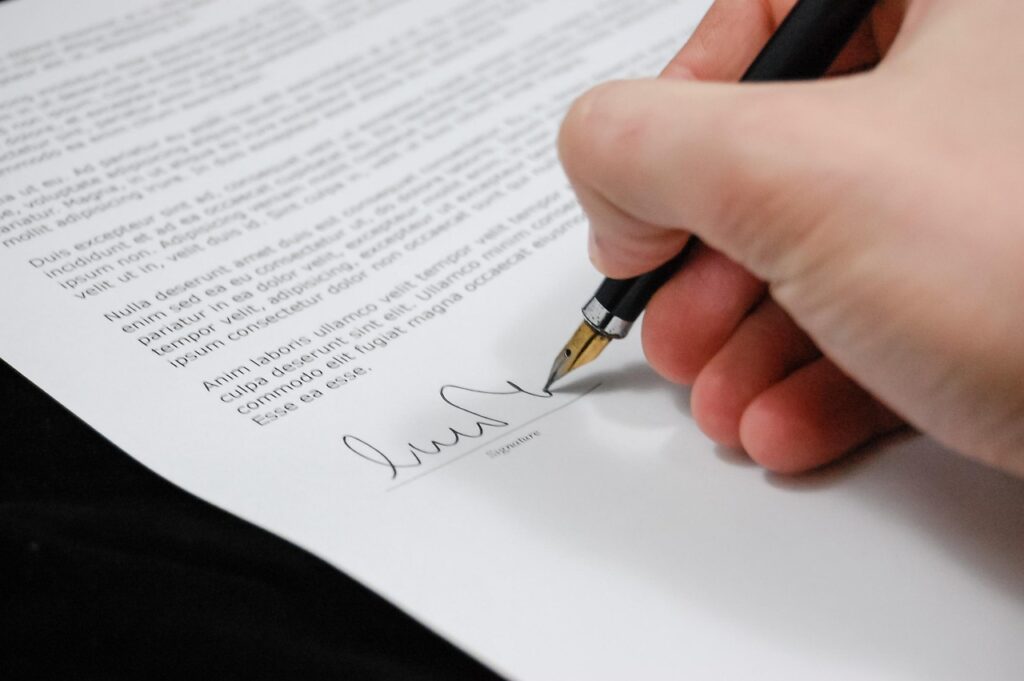
For forms, receipts, and signatures, the goal is a clean, legible mark that dries fast. Very wet pens can feather on low-cost copy paper, while very pale inks may reproduce poorly when scanned. A medium ballpoint or pigment gel pen is often a safe choice for ordinary administrative writing.
Journaling and personal writing
For journals, letters, and reflective writing, comfort becomes more important. The pen should not require excessive pressure, and the paper should feel pleasant over several pages. If you use fountain pens, rollerballs, or broad gel pens, test for bleed-through and feathering before committing to a full notebook.
Paper choices that change how a pen performs
Paper size is the most visible choice, but it is not the only one. International A-series paper sizes are specified by ISO 216, which covers trimmed sizes for writing paper and certain printed matter; the current ISO page lists ISO 216:2007 as published and confirmed in 2021. In practice, A4 is common in many countries, while Letter is common in the United States. The right size depends on where the paper will be stored, filed, scanned, or carried. (iso.org)
Paper weight is often misunderstood. In the U.S. system, basis weight depends on the weight of 500 sheets in a defined parent size, and those parent sizes differ by paper grade. USPS Publication 25 explains this basis-weight approach for mailing paper. GSM, by contrast, is grams per square meter, so it is easier to compare across formats. A higher GSM usually means a heavier sheet, but it is not a complete quality score; coating, fiber, surface sizing, and finish also affect how ink behaves. (about.usps.com)
Texture is the next factor. Smooth paper reduces drag and suits fine writing, fast note-taking, and small handwriting. More textured paper can feel expressive with pencils, broad nibs, and sketching, but it may slow quick writing or catch delicate pen tips. Absorbent paper dries ink quickly but can make lines look wider or fuzzy. Less absorbent paper can keep lines crisp, yet it may increase drying time.
Ruling also changes usability. Narrow ruled pages fit more words but can feel cramped with large handwriting. Wide ruled paper improves readability for larger writing or drafting. Grid pages help align numbers and diagrams. Dot grid paper is popular because it supports lists, layouts, and simple sketches while staying visually light.
Pen choices should match the paper
No single pen behaves well on every page. A ballpoint uses oil-based ink that is usually controlled, practical, and less likely to bleed through thin paper. It may require more pressure than other options, which can tire the hand during long writing sessions. Gel pens offer darker, smoother lines and a wide color range, but wetter gel ink can smudge on coated or slow-drying paper. Rollerball pens feel fluid and expressive, though they often need better paper to avoid feathering.
Fountain pens reward low pressure and a distinctive writing feel, but they are more sensitive to paper quality. On absorbent paper, fountain pen ink can spread into the fibers and show through the back of the sheet. On fountain-pen-friendly paper, the line can stay crisp and shaded. For more writing instrument ideas, explore the pen section for related stationery topics.
Tip size should match your handwriting and page layout. Fine tips suit small writing, compact planners, and dense notes. Medium tips are versatile for general writing. Broad tips are useful for headings, signatures, and expressive journaling, but they use more ink and need more space. If you write quickly, prioritize smooth flow and fast drying. If you write slowly or decoratively, line character may matter more. See also: Gift Guide.
What research really says about handwritten notes
The popular claim that handwritten notes always beat typed notes is too broad. A widely discussed 2014 Psychological Science paper by Pam Mueller and Daniel Oppenheimer reported advantages for longhand note-taking, especially for conceptual understanding, partly because laptop users tended to transcribe more verbatim. However, a 2021 APS summary of replication work reported small, statistically nonsignificant differences in immediate quiz performance and warned against treating the earlier finding as universal. (psychologicalscience.org)
More recent neuroscience research adds another layer, but it still needs careful interpretation. A 2024 Frontiers in Psychology study recorded brain electrical activity from 36 university students while they handwrote visually presented words with a digital pen or typed them on a keyboard. The study reported more elaborate connectivity patterns during handwriting. A later commentary cautioned that the lab task involved university students and did not directly measure classroom learning in children. (frontiersin.org)
For everyday stationery users, the balanced takeaway is practical rather than ideological. Paper and pen can support slower thinking, summarizing, sketching, and memory cues because the writer must choose what to capture. Digital notes may be better for searchable archives, sharing, editing, and long documents. Many people benefit from using both: paper for capture and thinking, digital tools for storage and collaboration.
A practical paper and pen matching table
| Use case | Paper to consider | Pen to consider | Why it works |
|---|---|---|---|
| Meetings | A5 or Letter notebook, lined or dot grid | Fine or medium ballpoint, quick-drying gel | Portable, fast, and easy to scan after the meeting |
| Study notes | A4, Letter, or large spiral notebook | Gel pen, rollerball, or smooth ballpoint | More page space supports summaries, diagrams, and review marks |
| Daily planning | Compact planner, dot grid, or narrow ruled paper | Fine gel pen or fine ballpoint | Small writing stays readable in tight layouts |
| Journaling | Heavier smooth paper, lined or blank | Gel, rollerball, fountain pen, or favorite refillable pen | Comfort and writing feel matter over longer sessions |
| Forms and signatures | Standard office paper | Medium ballpoint or fast-drying pigment gel | Controlled lines reduce smearing and feathering on mixed paper quality |
| Sketch notes | Blank, grid, or dot grid paper with moderate weight | Fineliner, gel pen, pencil, or marker pen after testing | Flexible layouts support arrows, icons, and visual grouping |
Buying and care checklist
Before buying a full stack of notebooks or a multipack of pens, test one page with your actual writing style. Write quickly, pause with the pen on the paper, highlight over the line if you use highlighters, and check the back of the page. Look for feathering, bleed-through, ghosting, dry time, and comfort. A pen that feels smooth for five words may feel slippery or tiring over five pages.
Think about storage as well. Keep paper away from humidity and direct sunlight, especially if you use notebooks for records or long-term journals. Store pens horizontally when recommended by the manufacturer, cap them when not in use, and avoid leaving ink pens in hot cars or near heaters. Refillable pens can reduce the number of disposable barrels you throw away, but only if refills are easy to find and you actually keep using the pen body.
Sustainability is another reason to buy more intentionally. The U.S. EPA states that its Facts and Figures program focuses on municipal solid waste and that the last major fact sheet was based on 2018 data. In that national overview, paper and paperboard accounted for about 67 percent of the municipal solid waste recycled. This does not mean every notebook is automatically sustainable, but it does show why paper choice, recycling habits, and avoiding unused stationery matter. (epa.gov)
- Choose the smallest format that still gives enough writing room.
- Match ink wetness to paper absorbency.
- Use fine tips for planners and dense notes.
- Use smoother, heavier paper for fountain pens or wet rollerballs.
- Buy refills when you buy a refillable pen, not months later.
- Keep one reliable everyday pen where you always need it.
Frequently asked questions
Is paper and pen better than digital note-taking?
Not always. Paper and pen can be helpful for focused thinking, sketching, summarizing, and quick capture. Digital tools are stronger for search, backup, sharing, and editing. The better choice depends on the task, not on a universal rule.
What paper works best with gel pens?
Gel pens usually work well on smooth paper that is not too absorbent. If the paper is very absorbent, lines may look wider. If the paper is coated or slow drying, smudging can become a problem. Test dry time before using gel pens in planners or on double-sided pages.
Which pen should I use on thin paper?
A fine or medium ballpoint is often safest on thin paper because the ink is controlled and less likely to bleed through. Fine gel pens can also work, but wet gel, rollerball, and fountain pen inks should be tested first.
Is heavier paper always better?
No. Heavier paper can reduce show-through and feel more substantial, but it also makes notebooks thicker and heavier. Surface treatment, texture, and ink compatibility can matter as much as weight.
How can left-handed writers reduce smudging?
Left-handed writers can try fast-drying ballpoints or gel pens, finer tips, and paper with moderate absorbency. Writing angle, hand position, and layouts with more open spacing can also reduce contact with fresh ink.